Potentilla centigrana
Potentilla centigrana
Description
Potentilla centigrana, commonly known as a type of cinquefoil, is a perennial herbaceous plant belonging to the Rosaceae family. Within botanical studies and agricultural interest, this species is noted for its adaptability to specific environmental niches, acting as both a component of natural ecosystems and a potential source of biochemical compounds.
The native range of this plant encompasses temperate regions of Eurasia, including the Russian Far East, Siberia, Japan, and Northeast China. It primarily inhabits moist meadow landscapes, riparian zones, and forest fringes, thriving in areas where soil moisture remains consistently high throughout the growing season.
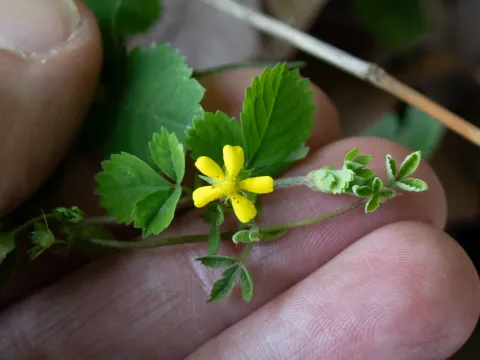
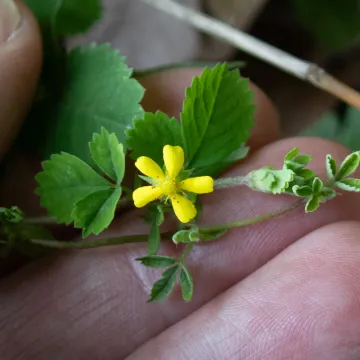
Botanically, Potentilla centigrana is characterized by its prostrate or ascending stems and palmately compound leaves, which are often covered in fine pubescence. The plant produces small, yellow, five-petaled flowers typical of the genus. Its root system is relatively shallow yet fibrous, allowing the plant to stabilize itself effectively in damp, loamy soils.
Regarding climate and soil requirements, the plant demands cool temperatures and adequate hydration. It does not perform well in arid environments, as moisture stress significantly hinders its growth. In an agricultural or experimental setting, it is best suited to nutrient-rich, moisture-retentive soils with good drainage to prevent waterlogging, which can lead to fungal issues.
- Requires consistent soil moisture.
- Prefers sunny or partially shaded locations.
- Shows high tolerance for cold, temperate winters.
- Susceptible to root rot if soil aeration is insufficient.
Its economic importance lies mainly in its historical use within traditional medicine, where its extracts are utilized for their astringent and anti-inflammatory properties. Typical pests include various meadow insects, while diseases are generally limited to fungal infections like mildews, which can be managed through proper spacing and regular monitoring of soil drainage conditions.
Photo gallery