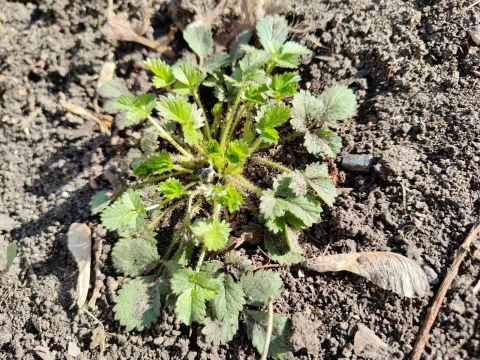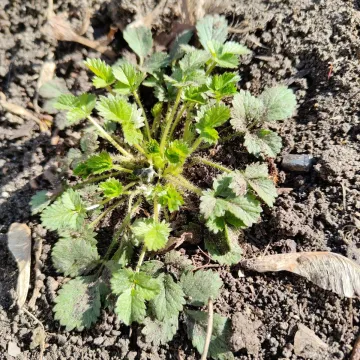
Norwegian cinquefoil
Potentilla norvegica
Description
Norwegian cinquefoil (Potentilla norvegica) is an annual or biennial herbaceous plant belonging to the Rosaceae family. In agricultural contexts, it is primarily identified as a common weed that can thrive in various field conditions, significantly impacting crop management strategies.
The species is widely distributed throughout the temperate regions of the Northern Hemisphere, including Europe, Asia, and North America. It is typically found in disturbed soils, cultivated fields, and moist pastures, often acting as a pioneer species in areas where vegetation has been removed or damaged.
Botanically, it is characterized by its erect, branched stem, which can reach heights of 60 cm. The leaves are trifoliate with serrated edges, and the plant produces small, bright yellow flowers arranged in terminal cymes. These features make it relatively easy to distinguish during vegetative growth.
Regarding agronomic requirements, the plant prefers fertile, nitrogen-rich soils with adequate moisture. Its lifecycle is highly opportunistic; it reproduces entirely by seed, which allows for rapid colonization of fallow fields. Effective control involves early cultivation to uproot seedlings and preventing seed set during the growing season.
While Norwegian cinquefoil has limited agricultural use, it is an important plant in ecological studies regarding soil recovery and biodiversity. In commercial farming, however, it is managed as a competitor for water and soil nutrients, necessitating precise crop rotation and the use of targeted weed control measures.
- Highly resilient to soil compaction.
- Produces a massive amount of seeds per individual plant.
- Capable of surviving in diverse soil pH levels.
Photo gallery