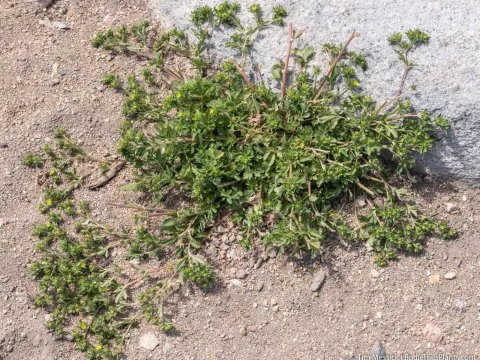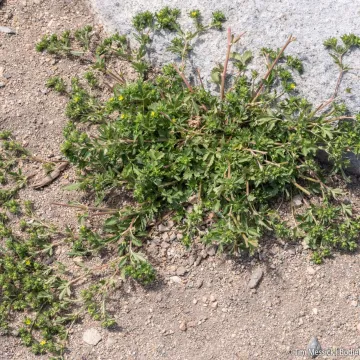
Brook cinquefoil
Potentilla rivalis
Description
Brook cinquefoil (Potentilla rivalis) is an annual or biennial herbaceous plant belonging to the Rosaceae (Rose) family. In agricultural settings, it is primarily identified as a weed, often found colonizing moist areas, irrigation ditches, and wet cropland, where it can compete aggressively with intended crops.
Native to North America, this species has successfully naturalized in various regions with temperate climates worldwide. It thrives in locations characterized by consistently high soil moisture levels, frequently colonizing riverbanks, riparian zones, and fields that suffer from poor drainage or seasonal flooding.
Botanically, the plant features erect or ascending stems that can reach heights of 20 to 80 centimeters. Its foliage consists of trifoliate leaves with serrated margins. The flowers are small, yellow, and arranged in loose clusters. The plant produces a high volume of small seeds, which facilitates its persistence in the seed bank of the soil and rapid colonization of disturbed land.
The plant has specific environmental requirements, favoring nutrient-rich and damp soil conditions. While it does not tolerate extreme drought well, it is highly resilient in wet habitats. Successful agronomic control requires a combination of moisture management and integrated pest management practices to prevent the weed from establishing dominance over the crop canopy.
As a weed, it poses risks by reducing overall crop yields and serving as a potential host for various pests and diseases that affect other members of the Rose family. Recommended management strategies for farmers include:
- Regular field scouting to identify infestations early.
- Implementing deep cultivation to bury seeds.
- Utilizing selective herbicides at early growth stages.
- Improving field drainage to reduce suitable habitat.
- Rotating crops to break the life cycle of the weed.
Photo gallery