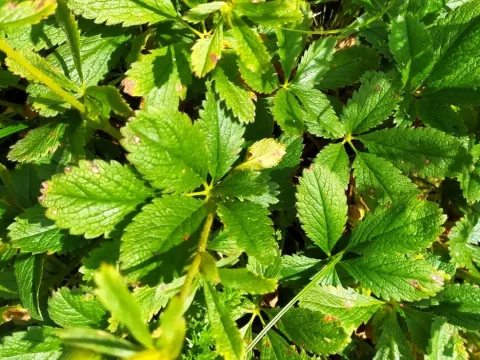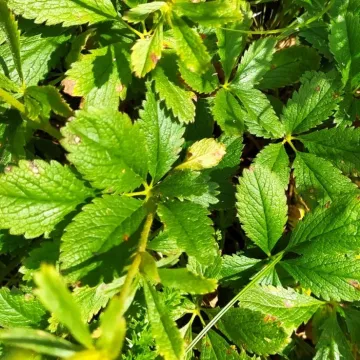
Shade cinquefoil
Potentilla umbrosa
Description
Shade cinquefoil (Latin: Potentilla umbrosa) is a herbaceous perennial plant belonging to the Rosaceae family. Unlike many of its counterparts that thrive in open fields, this species is specifically evolved to flourish in environments with limited sunlight, making it a valuable asset for shaded gardens.
The plant originates from the mountainous forest regions of the Caucasus. Its natural habitat includes damp slopes, forest understories, and rocky crevices. These environmental conditions have shaped the plant's resilience, requiring a moderate climate and stable moisture levels to maintain its physiological health and structural integrity.
Botanically, it is characterized by its rhizomatous root system, which allows it to form dense, creeping mats. Its leaves are typically palmately compound, often featuring a distinct texture that adds to its ornamental value. Small flowers appear in loose inflorescences during the late spring and early summer, providing a delicate look to the shaded areas it inhabits.
Cultivation requirements for this species include nutrient-rich, well-draining soil that retains moisture. It is crucial to avoid waterlogged conditions, which can lead to root rot. While the plant is generally hardy and resistant to many pests, it is susceptible to typical fungal diseases such as powdery mildew if airflow is restricted or humidity levels become excessively high during hot seasons.
In terms of agricultural and horticultural use, shade cinquefoil is widely recognized as an excellent ground cover. It is ideal for filling gaps beneath trees or along north-facing walls where other plants struggle. Historically, many Potentilla species have been utilized in traditional medicine due to their high tannin content, which provides effective astringent properties.
- High shade tolerance
- Effective weed suppression
- Robust rhizomatous growth
- Low maintenance requirements
Photo gallery