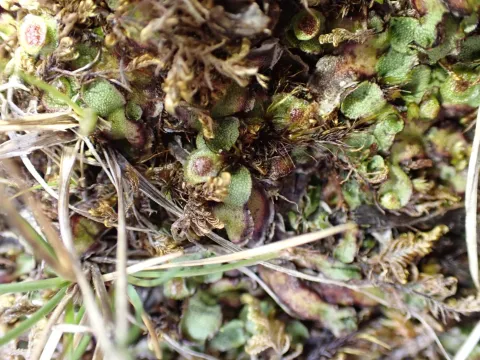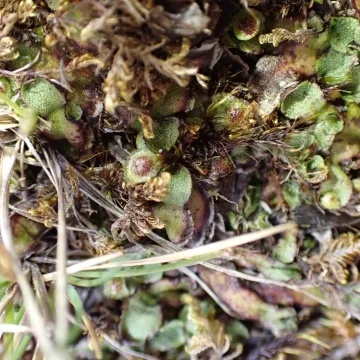
Preissia quadrata
Preissia quadrata
Description
Preissia quadrata is a perennial liverwort belonging to the family Aytoniaceae. As a member of the Marchantiophyta division, it is characterized by a complex thalloid structure, distinguishing it from simpler moss species. It serves as a fascinating example of botanical adaptation to niche environments.
This species is widely distributed across the Northern Hemisphere, occurring in diverse temperate and arctic regions. It typically thrives in moist, shaded environments, particularly on calcareous cliffs, riverbanks, and soil banks where humidity levels remain consistently high throughout the growing season.
Botanically, Preissia quadrata features a dark green, dichotomously branched thallus. The upper surface exhibits distinct air chambers with pores that facilitate gas exchange. The plant is notably recognized for its reproductive structures, known as gametangiophores, which resemble small umbrellas and emerge during the fertile season to disperse spores.
The ecological requirements of this species are highly specific. It is a calciphile, meaning it requires soils or rock substrates rich in calcium carbonate. It is not an agricultural crop; however, its presence is a strong indicator of high soil alkalinity and clean, moist environmental conditions, making it useful in environmental monitoring.
The cultivation of Preissia quadrata is non-existent in commercial agriculture. Because it grows in highly specific wild habitats, it does not suffer from traditional crop diseases. Its primary threats include the disruption of hydrological regimes, severe habitat fragmentation, and industrial pollution that alters the chemical composition of its native substrate.
Photo gallery