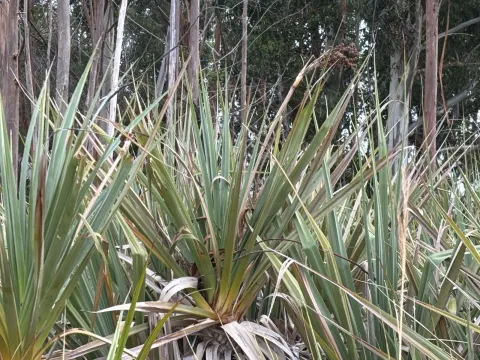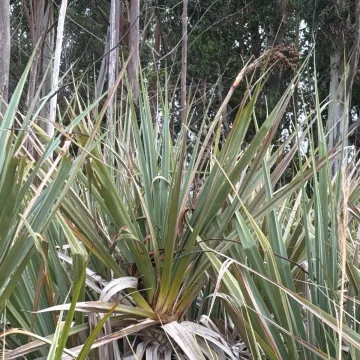
Prionium serratum
Prionium serratum
Description
Prionium serratum, commonly referred to as the palm-like plant of the Tofieldiaceae family, is a distinct perennial species adapted to wetland environments. It is characterized by its large, rigid, serrated leaves and a robust rhizomatous root system. In its native habitat, it forms dense clusters that dominate the local landscape and provide structure to the riparian zones.
The plant is native to the southern regions of Africa, where it thrives along riversides, marshes, and perennial streams. Its evolutionary history is tied to high-moisture ecosystems where it can access constant water supply. Given its natural distribution, it requires specific subtropical conditions to maintain vigorous growth and prevent tissue dehydration.
The botanical structure of this crop is designed for survival in water. Its leaves are fibrous and leathery, protected by sharp, saw-like margins that deter herbivores. The root architecture is particularly efficient at anchoring the plant in silt or alluvial soils, making it a natural agent for soil stabilization along riverbanks and preventing erosion.
Agronomic requirements are centered on hydrological management. To cultivate Prionium serratum successfully, one must replicate its natural wetland environment. This includes high soil moisture retention, regular flooding, or cultivation in channels with slow-moving water. The soil should be high in organic matter to provide the necessary nutrients for its rapid biomass accumulation.
Economic applications are primarily focused on the harvest of its durable fibers. Traditionally used for crafting mats, baskets, and cordage, the plant is valued for its longevity and resistance to moisture. Beyond fiber production, Prionium serratum serves a critical function in ecological restoration, acting as a natural filter that improves water quality by trapping sediment and absorbing excess nutrients.
- Excellent fiber durability for crafts.
- High natural resistance to pests in wetlands.
- Effective tool for water purification.
- Requires precise hydrological control.
Photo gallery