Fragrant devil's claw
Proboscidea fragrans
Description
Proboscidea fragrans, commonly known as the fragrant devil's claw, is an interesting annual plant belonging to the Martyniaceae family. This crop is noted for its distinctive, hooked seed pods and fragrant flowers, which bloom throughout the warmer months. It has gained attention not just for its unique appearance, but also as a resilient garden crop.
Originating from the arid regions of North America, particularly the southwestern United States and Mexico, the plant is well-adapted to hot and dry climates. It thrives in well-draining, sunny locations where it can develop a deep root system. Its native habitat influences its agricultural requirements, specifically the need for warm, well-aerated soil types.
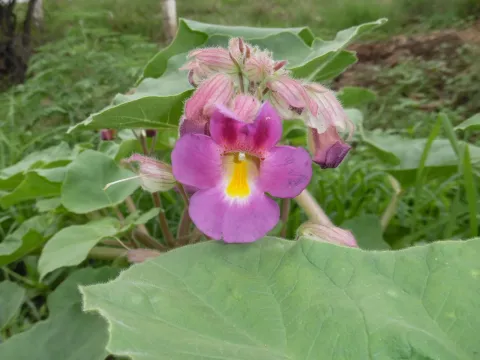
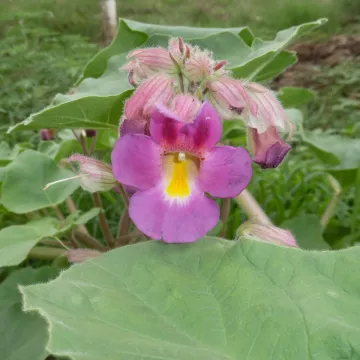
Botanically, the plant features large, heart-shaped leaves and glandular, sticky stems. The flowers are typically trumpet-shaped and exhibit shades of pink or purple with yellow nectar guides. As the plant matures, it produces large seed pods that, when dry, split into two woody, claw-like appendages, a feature that distinguishes this species within the family.
In terms of agricultural management, Proboscidea fragrans is best cultivated in warm regions with long growing seasons. Seeds should be planted after the danger of frost has passed, as the plant is sensitive to cold. It is relatively drought-tolerant once established but benefits from consistent watering during the fruit-setting stage to maximize yields.
- Requires full sun exposure for optimal growth.
- Prefers sandy or loamy, well-drained soil.
- Can be susceptible to spider mites and aphids in hot, dry conditions.
- Young, tender pods are the primary edible portion of the plant.
The culinary usage of this crop centers on the immature, succulent green pods, which are often pickled or prepared similarly to okra. While the mature, dry pods are often avoided due to their woody texture, they are widely used in dried floral arrangements and craft projects. Proper field hygiene and rotation help mitigate potential fungal issues in humid conditions.
Photo gallery