Proboscidea louisianica
Proboscidea louisianica (Mill.) Thell. subsp. louisianica
Description
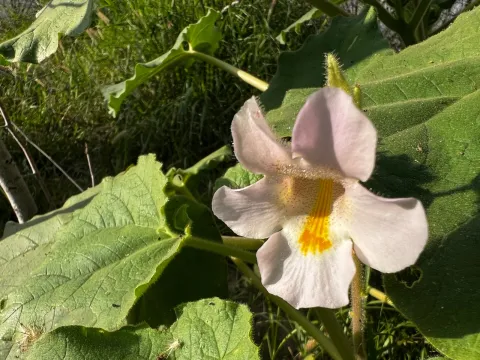
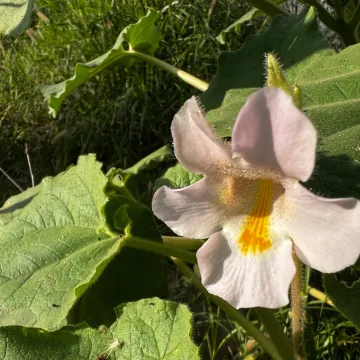
Proboscidea louisianica is an herbaceous annual plant belonging to the Martyniaceae family. Commonly known as "devil's claw" or "ramshorn," the plant is famous for its unique seed pods that develop long, curved, woody hooks. The plant is characterized by a sturdy, branching stem and large, heart-shaped leaves covered with sticky glandular hairs that trap insects.
The plant originates from the southern United States and northern Mexico, areas known for their warm and semi-arid climates. Being a xerophytic-adapted crop, it thrives in intense heat and high light conditions. While often found in the wild on sandy soils, it is successfully cultivated in gardens and agricultural settings where full sun is available for the duration of its growing cycle.
Agricultural requirements for Proboscidea louisianica center on a long, frost-free growing season. In cooler regions, starting seeds indoors 4–6 weeks before the last frost date is essential. The soil must be well-drained and loose, as the plant is susceptible to root rot if waterlogged. Moderate fertilization with balanced nutrients during the vegetative stage helps maximize pod yield and overall plant health.
The economic value of this crop is quite diverse. The immature, green pods are edible and often pickled or prepared similarly to okra or green beans. Mature seeds contain a high percentage of oil, which is nutritionally similar to sesame oil and can be extracted for culinary use. Furthermore, the dried, woody seed pods are highly sought after in the floral industry for dried arrangements and handicrafts.
The crop is prone to common pests like aphids and spider mites, which are attracted to the glandular secretions on the leaves. Root pathogens can be a major issue if the soil texture is too heavy or drainage is poor. To ensure a successful harvest, it is important to maintain consistent moisture levels without oversaturating the root zone and to ensure the plant is spaced properly to prevent foliage diseases caused by poor air circulation.
Photo gallery