Proserpinaca intermedia
Proserpinaca intermedia
Description
Proserpinaca intermedia is a perennial amphibious plant belonging to the Haloragaceae family. Recognized as a natural hybrid between Proserpinaca palustris and Proserpinaca pectinata, it exhibits unique botanical features that distinguish it from its parent species within the marsh flora of North America.
The plant originates from the Eastern United States, where it thrives in wetlands, swamps, and along the edges of shallow water bodies. Its evolutionary adaptation to fluctuating water levels allows it to transition effectively between submerged and emersed growth forms depending on environmental conditions.
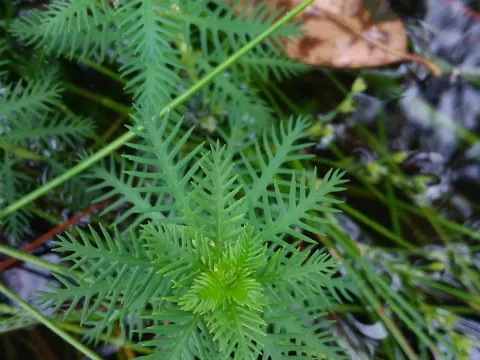
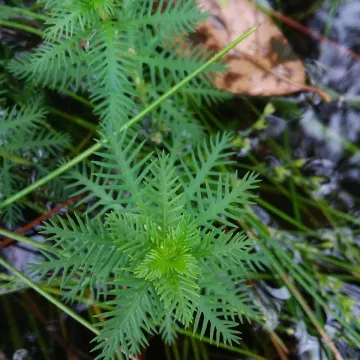
Botanically, the plant is characterized by its polymorphic leaves. The submerged foliage is deeply pectinate, providing a delicate, fern-like appearance, while the emersed leaves tend to be more serrated and rigid. The coloration is highly dependent on light intensity and nutrient availability, often shifting towards vibrant shades of red and copper.
Successful cultivation requires specific environmental conditions, including a nutrient-rich substrate and strong, consistent lighting. Maintaining a temperature range between 22 and 26 degrees Celsius is critical. Furthermore, the inclusion of iron in the fertilization regimen is essential to prevent chlorosis and to promote the plant's characteristic reddish pigmentation.
The primary economic and practical use of Proserpinaca intermedia is in the hobby of aquascaping and specialized botanical displays. It is a highly sought-after specimen for aquarists and landscape designers who specialize in creating sophisticated, high-tech planted tanks or paludariums.
- Prefers slightly acidic to neutral water conditions
- Requires high-intensity lighting for optimal coloration
- Beneficial to supplement with CO2 in submerged setups
- Propagation primarily achieved through stem cuttings
Photo gallery