Protorhus longifolia
Protorhus longifolia
Description
Protorhus longifolia is an evergreen tree species belonging to the Anacardiaceae family. Known for its robust growth and dense foliage, it serves as a significant component of its natural habitat in Southern Africa. In agricultural and landscaping contexts, it is appreciated for its resilience and the shade it provides, making it a valuable addition to subtropical planting programs.
The origin of this species is linked to the forest margins and coastal regions of South Africa. Over time, its ability to thrive in varied environmental conditions has led to its broader distribution. The tree is well-adapted to high-light environments and is capable of maintaining its structure and health even in areas with fluctuating seasonal rainfall.
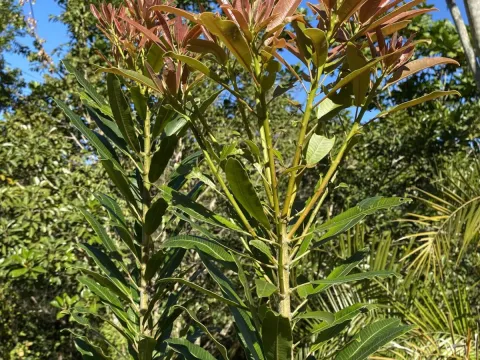
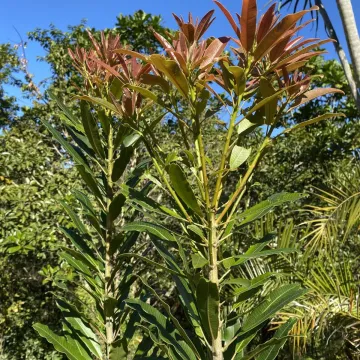
Botanically, Protorhus longifolia features long, leathery, lance-shaped leaves and produces small, edible fruits that attract local wildlife. The wood of the tree is characterized by its high density, which has historically made it useful for utility purposes in local craftsmanship. Its growth habit is typically spreading, and it can reach considerable heights when mature and well-maintained.
When considering the cultivation of this species, agricultural practices should focus on providing well-draining soil and a consistent moisture regime, particularly during the initial years of development. While it shows some drought tolerance, supplemental watering during hot and dry spells ensures optimal leaf color and structural integrity. Regular pruning is also advised to maintain the desired shape and improve air circulation through the canopy.
- Thrives in full sun to partial shade.
- Adaptable to a range of soil types, provided they are well-drained.
- Excellent species for erosion control on slopes.
- Significant ecological value for local avian populations.
- Requires protection from severe frost during the seedling stage.
Common issues for this culture include susceptibility to specific sap-sucking insects, such as scale insects, and occasional fungal infections if humidity is too high. Effective management strategies involve regular monitoring for signs of infestation and ensuring the soil does not remain waterlogged, as this is the primary cause of root stress in this species.
Photo gallery