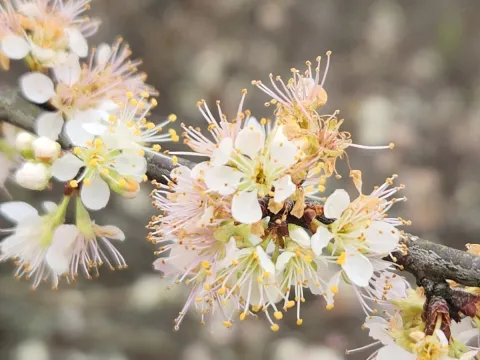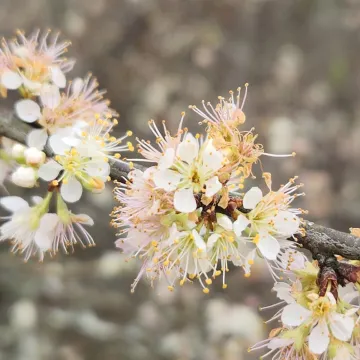
Chickasaw plum
Prunus angustifolia
Description
The Chickasaw plum (Prunus angustifolia) is a deciduous shrub or small tree belonging to the Rosaceae family. Known for its extensive suckering habit, this species often grows in dense thickets, making it an excellent candidate for erosion control, windbreaks, and natural screening in large landscapes or homesteads.
Native to the southeastern United States, this species thrives in regions with warm, long summers and moderate winters. It is highly adaptable to a variety of environments, ranging from sandy hills to open woodlands. Its range of cultivation has expanded due to its ability to colonize disturbed sites and tolerate poor soil conditions.
Botanically, it is distinguished by its narrow, lanceolate leaves and white, fragrant blossoms that appear early in the spring. The fruit is a small, round drupe, typically yellow to bright red at maturity. These fruits are highly prized by wildlife and are also harvested for jams, jellies, and desserts, offering a distinct, tart flavor profile.
Cultivation requirements for Prunus angustifolia are relatively straightforward. The tree performs best in full sun and thrives on well-drained, sandy loam soils. It is remarkably drought-tolerant once established. Gardeners should manage suckers to maintain a desired shape or to prevent the tree from spreading uncontrollably into unwanted areas.
Regarding health management, the species is susceptible to common stone fruit diseases, including black knot, brown rot, and bacterial leaf spot. Pests such as plum curculio and aphids can also affect fruit yield. Implementing a proactive monitoring program and maintaining proper tree hygiene—such as removing infected branches—are essential steps for sustainable production.
Photo gallery