Silver cherry
Prunus argentea
Description
Silver cherry (Prunus argentea) is a perennial woody plant belonging to the Rosaceae family. It is a highly specialized species recognized for its extraordinary ability to thrive in arid and harsh environmental conditions where many other orchard fruits would fail to survive.
The species is native to the mountainous regions of Western Asia, particularly in countries like Turkey and Iran. Its evolution in rocky, high-altitude environments has equipped it with unique physiological mechanisms, making it an excellent candidate for regions experiencing long periods of drought and high heat stress.
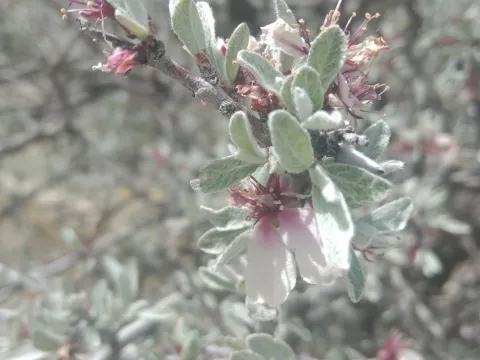
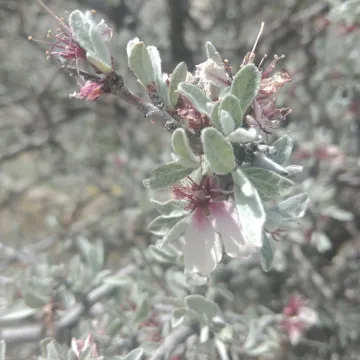
Botanically, Prunus argentea is identified by its small, shrubby growth habit and distinct silvery pubescence on its leaves and young shoots. These tiny hairs serve as a protective layer, reducing moisture loss via evaporation and reflecting intense solar radiation, which is a classic adaptation to arid climates.
Agricultural requirements for this crop focus on soil drainage and sunlight. It prefers well-aerated, limestone-rich soils. Standard agrotechnical practices include minimal irrigation once the tree is established, careful pruning to maintain vigor, and ensuring that the tree is planted in areas with excellent drainage to prevent the root suffocation common in heavy, waterlogged soils.
The primary economic use of the Silver cherry is as a specialized rootstock. Because of its drought tolerance, it is being studied for its potential to provide a hardy foundation for commercial cherry varieties in arid agricultural zones. Common challenges in maintaining healthy trees include:
- Fungal pathogens such as shot-hole disease (Stigmina carpophila).
- Infestations of aphids and mites during the vegetative growth phase.
- Susceptibility to Phytophthora root rot if soil drainage is compromised.
Photo gallery