Two-faced plum
Prunus bifrons
Description
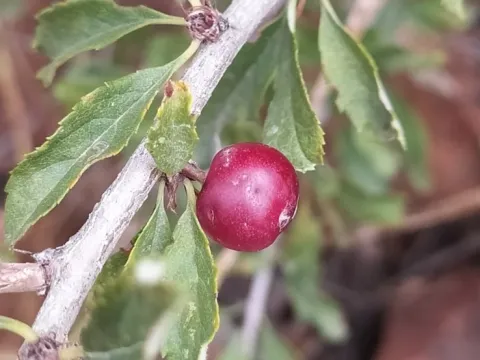
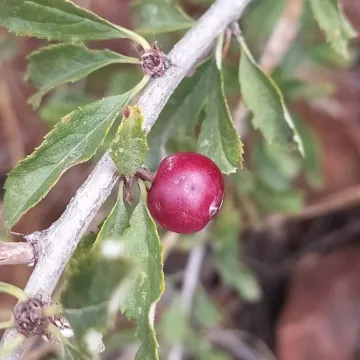
Two-faced plum (Prunus bifrons) is a distinct species of woody plant belonging to the Rosaceae family. It is a rare stone fruit species that remains largely understudied in commercial agriculture but is of significant interest to botanists and pomologists. As a wild relative of cultivated plum varieties, it possesses unique genetic traits that allow it to thrive in challenging environments.
The native habitat of Prunus bifrons is concentrated in the mountainous and semi-arid regions of the Middle East, particularly in parts of Iran and neighboring countries. The plant is naturally adapted to rocky, well-drained soils and fluctuating climate conditions, characterized by cold winters and very hot, dry summers. Its evolutionary history has made it a resilient species capable of surviving in marginal lands.
From a botanical perspective, the plant is typically categorized as a deciduous shrub or a small, hardy tree. It features distinctive leaves and small, firm drupes that reflect its adaptation to limited moisture. The tree's morphology is designed to minimize water loss, often characterized by root systems that search deep into rocky substrates for mineral-rich groundwater and foliar characteristics that withstand high UV exposure.
Agricultural requirements for Prunus bifrons emphasize the importance of site selection. It thrives in soils with an alkaline or neutral pH and requires excellent drainage to prevent root rot. Direct sunlight is essential for the healthy growth and development of the canopy. While it is hardy in its native range, domestic cultivation requires careful irrigation management, especially during the fruit-setting stage in the spring.
In terms of practical utility, the species is primarily valued as a genetic resource for improving modern stone fruit cultivars, particularly for drought tolerance and disease resistance. While not grown for mass consumption, it can be utilized in landscaping as a hardy, low-maintenance ornamental. Like other species in the Prunus genus, it is susceptible to typical stone fruit pests such as aphids and borers, as well as fungal diseases like shot-hole disease, which require proactive management.
Photo gallery