Bukhara almond
Prunus bucharica
Description
Bukhara almond (Prunus bucharica) is a wild-growing species of the Rosaceae family that serves as a vital genetic resource for modern stone fruit breeding. This shrubby plant is renowned for its remarkable endurance and ability to thrive in challenging semi-arid environments.
The origin of this species is traced back to the mountainous regions of Central Asia, specifically the Pamir-Alay and Tian Shan ranges. It typically occupies rocky, calcareous slopes where it has evolved to survive under severe drought and high-temperature conditions throughout the growing season.
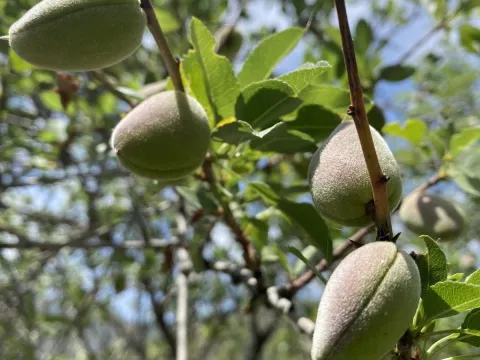
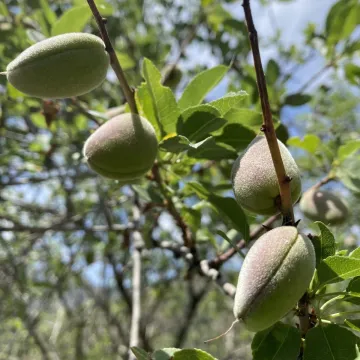
From a botanical standpoint, this species is characterized by a deep and efficient root system, dense foliage with narrow leaves, and early spring flowering with pale pink petals. The fruit is a small, dry drupe with a woody endocarp, containing a seed that reflects the wild characteristics of its genus.
Agricultural success depends on mimicking its natural habitat requirements: full sun exposure, extremely well-draining soil, and low humidity. It is highly intolerant of waterlogged soil, which can lead to rapid root rot. Standard maintenance involves periodic pruning to ensure structural health and monitoring for common stone fruit pests.
Economically, the Bukhara almond is primarily valued for its utility in horticulture as a rootstock. Its extreme resilience to heat and drought makes it an ideal candidate for cross-breeding programs aimed at developing almond and apricot cultivars capable of yielding harvests in arid climates with limited irrigation water.
- Outstanding drought tolerance.
- Excellent genetic source for stress-resistant rootstocks.
- Low maintenance in wild-like conditions.
- Important for soil erosion control in mountainous regions.
Photo gallery