Desert almond
Prunus fasciculata
Description
Desert almond (scientific name Prunus fasciculata) is a deciduous shrub belonging to the Rosaceae family. It is widely recognized for its exceptional resilience and its ability to thrive in harsh, arid desert environments where traditional fruit-bearing species fail to establish.
The plant is native to the southwestern United States, primarily inhabiting the dry, rocky slopes of the Mojave and Sonoran deserts. Its natural habitat is characterized by extreme temperature fluctuations and very low annual precipitation, which has shaped its unique evolutionary adaptations.
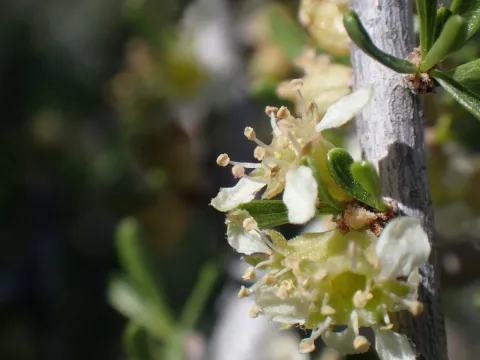
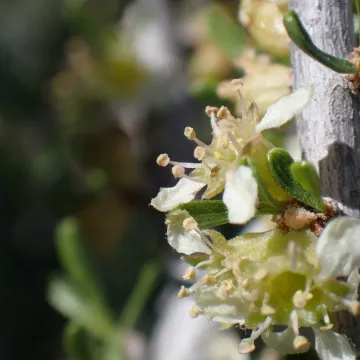
Botanically, it is a stiff, branched shrub that typically grows between 1 to 3 meters in height. The plant is characterized by its small, fascicled leaves and sharp, spine-tipped branches. During the spring, the shrub produces a profusion of small white flowers, creating a visually striking display in otherwise barren desert landscapes.
Cultivation of this species requires a deep understanding of its physiological needs. It demands extremely well-drained, sandy or gravelly soils and thrives under direct, intense sunlight. Gardeners must avoid overwatering, as the root system is highly susceptible to fungal infections in waterlogged conditions, making it an excellent candidate for xeriscaping.
In terms of agricultural and landscape usage, the Desert almond is invaluable for erosion control and as a nectar source for native pollinators. While its small, fuzzy drupes are edible, they are mostly consumed by desert wildlife. The shrub remains largely resistant to common orchard pests due to its specific chemical composition and tough physical structure.
- High drought tolerance
- Excellent for soil stabilization
- Requires minimal to no fertilization
- Attractive to local bee populations
- Low maintenance once established
Photo gallery