Hortulan plum
Prunus hortulana
Description
Hortulan plum (lat. Prunus hortulana) is a fruit-bearing tree species belonging to the Rosaceae family. Native to North America, this species is highly regarded in agriculture for its resilience and adaptability to varying environmental conditions. It serves as a vital genetic resource in plant breeding, particularly for developing hybrid plum varieties that possess superior cold tolerance and disease resistance compared to standard commercial plums.
The natural range of this species is primarily centered in the central and eastern United States, where it typically grows in river valleys and forest edges. Due to its evolutionary history, the Hortulan plum demonstrates a remarkable ability to thrive in soils that may be periodically saturated, a trait that makes it superior to many other stone fruits in challenging site conditions. It is increasingly recognized for its ecological value in sustainable orchard systems.
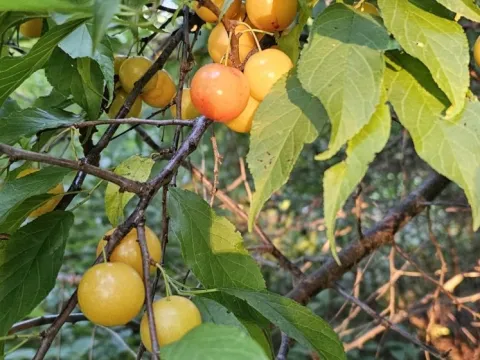
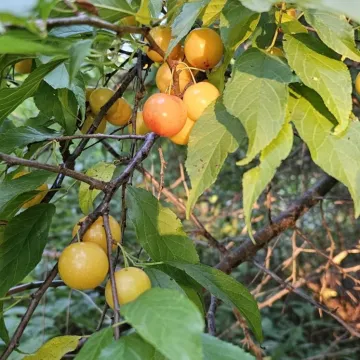
Botanically, Prunus hortulana grows as a large shrub or a small tree, reaching a height of approximately 6–7 meters. The foliage is smooth and aesthetically pleasing, while the fruits, which are generally small, round, and vibrant in color, provide excellent quality for culinary processing. The skin of the fruit is sufficiently firm, which is a significant advantage for post-harvest handling and transport.
The horticultural requirements for this species are moderate, focusing on well-drained, nutrient-rich soils with a neutral pH level. Effective orchard management includes consistent pruning to maintain canopy health, proper fertilization schedules to support fruit development, and irrigation during critical growth stages. Its inherent hardiness makes it a reliable candidate for cultivation in regions with fluctuating temperatures.
Economically, the Hortulan plum is utilized for both fruit production and as a rootstock or ornamental feature. The fruits are commonly processed into preserves, jellies, and sauces, valued for their distinct flavor profile. Growers must remain vigilant against typical stone fruit pests and diseases, such as leaf spot and various fungal blights, ensuring long-term tree productivity through integrated pest management and hygiene.
- Routine pruning to remove deadwood and improve light penetration.
- Application of preventative fungicides to control fungal pathogens.
- Mulching to retain soil moisture and suppress competitive weeds.
- Monitoring for common stone fruit pests during the growing season.
Photo gallery