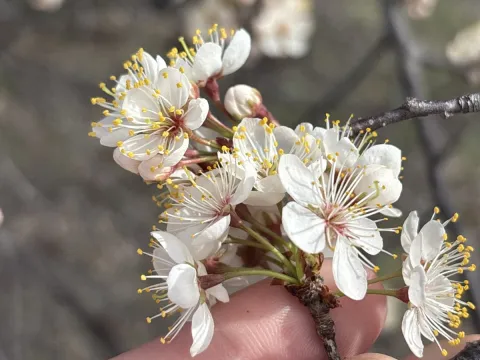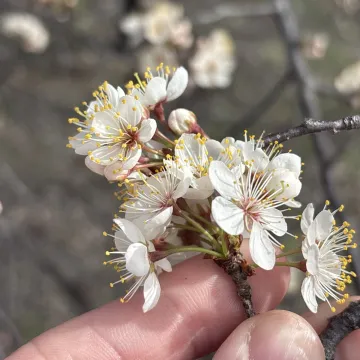
Woolly plum
Prunus lanata
Description
The woolly plum (Prunus lanata) is a distinct species within the Rosaceae family. Known for its specific physical traits, this fruit-bearing plant represents an interesting niche in stone fruit horticulture, valued primarily for its botanical uniqueness and genetic traits that differ from common plum species.
Native to specific regions in Asia, the woolly plum has evolved within ecosystems that require resilience against local environmental fluctuations. Its cultivation area, while not as extensive as that of commercial plum varieties, is expanding among enthusiasts and researchers interested in preserving diverse germplasm for future breeding efforts.
The plant is morphologically defined by the dense pubescence found on its young shoots and the undersides of its leaves, which provides the inspiration for its scientific name. These fine hairs act as a protective barrier, helping the plant mitigate the effects of transpiration and potentially deterring certain types of herbivorous insects during the early growth stages.
Cultivation requires well-drained, fertile soil and a location with significant sun exposure. Proper agronomic management involves systematic pruning to optimize light penetration into the canopy, alongside balanced fertilization to support seasonal productivity. Maintaining soil moisture is critical, especially during the fruit development phase, to ensure optimal yield and quality.
Economically, the species is primarily utilized in fruit processing and as a genetic donor for breeding programs aiming to improve disease resistance in commercial plum cultivars. While not a primary mass-market crop, its role in specialized pomology and sustainable gardening practices makes it a significant subject for horticultural study and development.
- Distinctive pubescent foliage and stems
- High potential for genetic diversity research
- Suitability for sustainable orchard management
- Unique profile for specialty fruit processing
Photo gallery