Catalina cherry
Prunus lyonii
Description
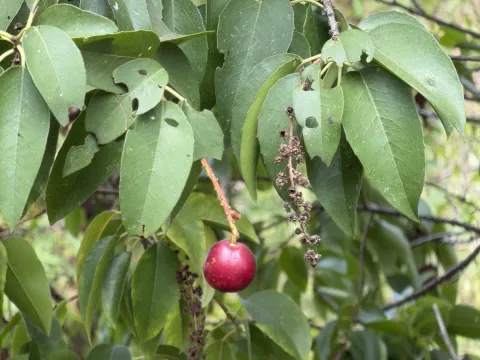
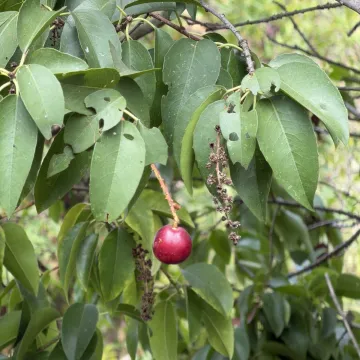
Catalina cherry (Prunus lyonii) is an evergreen species belonging to the Rosaceae family. Native to the Channel Islands of Southern California, it is a robust, large shrub or small tree widely recognized for its glossy, dark green foliage and its role in coastal landscapes.
The natural range of this species is confined to specific islands where it thrives in Mediterranean-type climates. Its evolutionary adaptation to these coastal environments makes it an exceptionally hardy plant, well-suited for gardens in mild climates that experience seasonal dryness.
Botanically, Prunus lyonii is characterized by its dense growth habit and thick, leathery leaves. During the spring, the tree produces racemes of white flowers that emit a delicate fragrance. The subsequent small, dark fruit provides a vital food source for local bird populations, supporting local biodiversity.
Agricultural requirements include planting in well-draining soil with an appropriate pH balance. Once established, the Catalina cherry exhibits significant drought tolerance, though it benefits from supplemental water during prolonged heat waves. It adapts well to various sun exposures, though it performs best when provided with ample light.
In terms of хозяйственного (economic) use, the plant is primarily cultivated for its aesthetic value as a hedge or privacy screen. Common management challenges involve monitoring for scale insects and aphids, as well as managing potential fungal issues such as shot-hole fungus, which can occur if the foliage remains wet for extended periods.
- Excellent choice for privacy hedges
- Provides habitat and food for wildlife
- High tolerance for coastal conditions
- Evergreen foliage for year-round interest
Photo gallery