Petunnikov almond
Prunus petunnikowii
Description
The Petunnikov almond (Prunus petunnikowii) is a distinct, low-growing shrub belonging to the Rosaceae family. This species is highly regarded in horticulture for its exceptional resilience to arid environments and harsh climates. It serves as a vital genetic resource for plant breeders looking to improve the drought tolerance of other stone fruit crops, as well as being a decorative asset for xeriscaping.
Native to the mountain ranges of Central Asia, this shrub is naturally adapted to rocky slopes and high-altitude habitats where resources are scarce. Its geographic range covers parts of the Tian Shan and Pamir-Alai mountain systems. Because of its native origin, the plant possesses inherent physiological mechanisms that allow it to thrive in nutrient-poor, rocky substrates that would be unsuitable for more demanding fruit species.
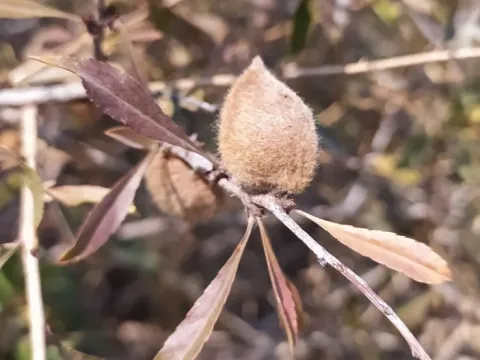
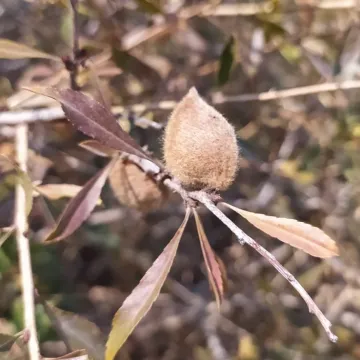
Botanically, it is a deciduous, compact shrub reaching a maximum height of approximately one meter. The branches are sturdy, often exhibiting a brownish-grey bark. Its leaves are narrow, lanceolate, and pubescent, a feature that significantly reduces water loss through transpiration. During the early spring, the shrub is covered in a profusion of delicate, bright pink flowers, making it a prominent feature in garden design.
Cultivation requirements for this species are specific. It demands excellent drainage and performs best in sandy or gravelly soils with a neutral to alkaline pH level. Irrigation should be applied sparingly, as the root system is highly sensitive to waterlogging. Standard maintenance includes occasional pruning after flowering to promote denser growth and to remove any damaged or dead wood.
The primary agricultural and economic uses include:
- Serving as a hardy rootstock for almond and peach grafting.
- Utilization in erosion control projects on steep, dry slopes.
- Incorporation into rock gardens and sustainable landscaping designs.
- Acting as a genetic reservoir for developing climate-resilient stone fruits.
Like many species in the Prunus genus, the Petunnikov almond can be susceptible to fungal diseases such as blossom wilt (Monilinia) if humidity levels remain high for extended periods. Common insect pests include aphids and leafrollers, which may affect foliage development. Maintaining proper spacing and ensuring full sun exposure are the most effective non-chemical methods to prevent disease outbreaks.
Photo gallery