Broom almond
Prunus scoparia
Description
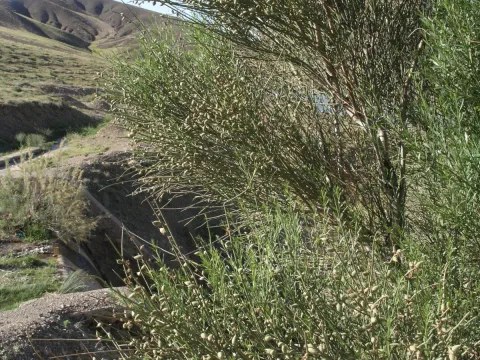
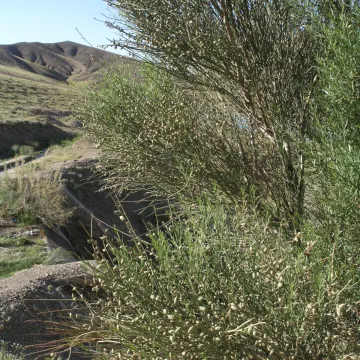
Broom almond (lat. Prunus scoparia) is a perennial shrub belonging to the Rosaceae family. Known for its remarkable xerophytic adaptations, this species is increasingly recognized by agronomists as a vital resource for developing orchards in arid and semi-arid regions where water resources are severely limited.
The plant originates from the mountainous regions of Central and Western Asia, specifically across Iran and Afghanistan. It naturally inhabits rocky slopes and dry hillsides, thriving in environments characterized by long, hot summers and cold winters, which has forged its reputation as one of the most resilient stone fruit species.
Botanically, it is a highly branched, shrubby plant reaching heights of up to 3 meters. Its key features include thin, lanceolate leaves that minimize transpiration and a dense, rigid root system capable of penetrating deep into compacted or rocky soil layers to seek moisture. The early spring bloom, with delicate pink to white flowers, is a distinct identifying characteristic.
In terms of cultivation, Prunus scoparia is undemanding regarding soil nutrient content but strictly requires excellent drainage. It is highly intolerant to waterlogging, as the root collar is prone to fungal diseases if kept in stagnant water. Minimal maintenance is required, focusing mainly on structural pruning to maintain its form and airflow within the crown.
The economic value of this plant is primarily centered on its role as a superior rootstock for cultivated almonds and peaches, particularly in calcareous or saline soils. Beyond its utility in fruit production, it serves an important ecological role in soil stabilization, helping to prevent erosion on steep terrains and providing a source of pollen early in the season.
- Extreme tolerance to drought and heat
- Resilience in rocky and low-fertility soils
- Primary use as a drought-hardy rootstock
- Low maintenance requirements
- Excellent for soil stabilization and anti-erosion efforts
Photo gallery