Oshima Cherry
Prunus speciosa
Description
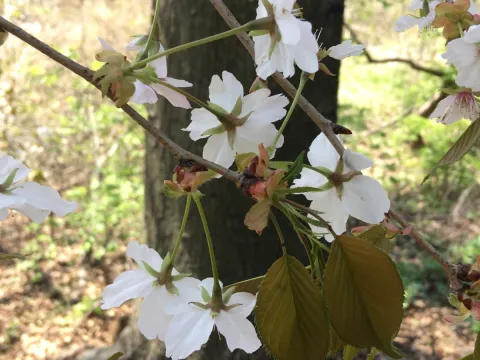
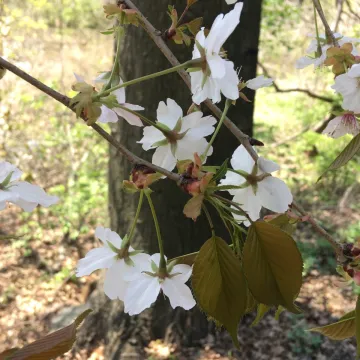
The Oshima cherry (Prunus speciosa) is a deciduous tree belonging to the Rosaceae family. It is recognized as one of the fundamental species of Japanese cherry blossoms, valued for its large, fragrant white flowers and its vigorous, spreading growth habit. In the horticultural world, it is highly regarded for its aesthetic value in parks and large gardens.
The species originates from the Izu Islands and the Izu Peninsula in Japan. Due to its natural habitat, it is well-adapted to oceanic and mild temperate climates. Over time, it has been introduced to various regions across the globe where it thrives as an ornamental plant, provided the winters are not excessively harsh.
Botanically, Prunus speciosa can grow up to 12 meters in height. The leaves are glossy, dark green, and serrated, providing a lush appearance throughout the summer months. The flowers appear in clusters, creating a striking visual display that is characteristic of the species. It is a parent to many modern hybrid cherry cultivars.
Cultivation requirements include a preference for well-drained, fertile soil with a neutral to slightly acidic pH. The plant requires full sunlight to achieve optimal flowering density. While it is relatively robust, newly planted specimens require consistent watering during the first few growing seasons until the root system is fully established.
The primary use of the Oshima cherry is ornamental, serving as a focal point in landscapes or as part of a mixed border. Regarding plant health, the species can be susceptible to common cherry pests such as aphids and scale insects. Maintaining tree health requires careful monitoring for fungal pathogens like blossom wilt and black knot, ensuring that adequate spacing and pruning are maintained to improve air circulation.
Photo gallery