Spiny plum
Prunus spinosissima
Description
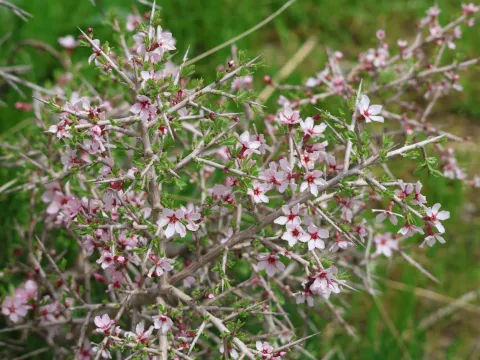
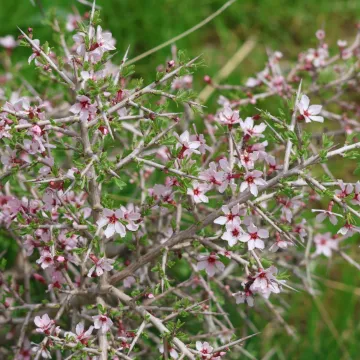
Spiny plum (Prunus spinosissima) is a shrubby plant species belonging to the Rosaceae family. Known for its remarkable adaptation to arid and semi-arid environments, this plant is characterized by its compact growth habit and presence of sharp thorns, which serve as a natural defense mechanism against herbivores.
Originating from the mountainous regions of Central and Western Asia, this species is naturally distributed across areas with extreme climatic conditions. It thrives in high-altitude environments where it has evolved to withstand long, dry summers and freezing winters, demonstrating superior environmental resilience compared to domesticated plum varieties.
Botanically, Prunus spinosissima is a deciduous shrub with small, simple leaves and pubescent twigs. The plant produces small stone fruits that possess a high concentration of antioxidants and organic acids. Its deep root system is a critical adaptation for survival in shallow, rocky, or nutrient-poor soils common in its natural habitat.
In terms of agricultural management, the spiny plum requires well-drained, sandy, or rocky soil conditions. It is highly intolerant of waterlogging, which makes site selection for cultivation crucial. The plant demands full sun exposure to promote vigorous growth and fruit development, while fertilizer requirements are generally very low.
The primary horticultural application for this species is its role as a rootstock for other Prunus cultivars, as it confers tolerance to drought and cold stress. Additionally, it is used in ecological restoration projects to prevent soil erosion. Common pests include aphids and mites, while fungal diseases can occur if the plant is grown in overly humid conditions.
- Exceptional drought tolerance
- Hardy rootstock for grafting
- Suitability for xeriscaping
- Low soil nutrient requirement
- Natural erosion control
Photo gallery