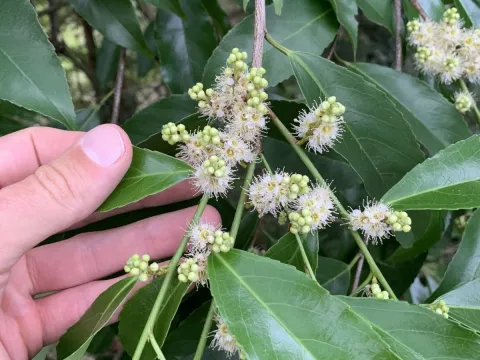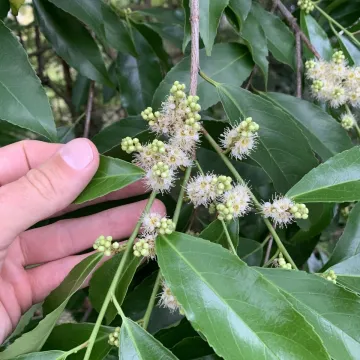
Prunus zippeliana
Prunus zippeliana
Description
Prunus zippeliana is an evergreen tree species belonging to the Rosaceae family. Within the broad genus Prunus, it represents a distinctive group often associated with the cherry laurel subgenus, known for its robust stature and year-round green foliage, which makes it a notable candidate for specific landscape applications.
The plant is native to the regions of East Asia, including China, Japan, and Vietnam. Its natural habitat consists primarily of subtropical and warm temperate forest ecosystems. It typically thrives in humid environments, often found at moderate elevations where it contributes to the density of evergreen broad-leaved forests.
Botanically, the species is characterized by its glossy, leather-like leaves that maintain their decorative appeal throughout the seasons. The flowers are typically arranged in small racemes, which eventually develop into small, dark-colored drupes upon maturation. These fruits serve as a critical food source for local bird populations in their native range.
Regarding cultivation, Prunus zippeliana requires well-drained, slightly acidic to neutral soils enriched with organic matter. The tree is sensitive to waterlogging, necessitating careful site selection with excellent drainage properties. Consistent moisture levels are ideal during the growing season, while protection from harsh, drying winter winds is recommended to prevent leaf desiccation.
In terms of practical usage, this species is primarily utilized in ornamental horticulture for creating evergreen screens, hedges, or structural focal points in garden designs. While not a primary agricultural commodity, its wood exhibits qualities that make it useful for small-scale woodcraft, and in some traditional practices, the fruits or plant parts have been utilized for medicinal properties.
- Planting season: Spring or early autumn.
- Soil requirements: Fertile, well-drained loam.
- Irrigation: Regular, ensuring no water stagnation.
- Propagation: Primarily seed-based or via cuttings.
- Maintenance: Pruning for shape and disease monitoring.
Photo gallery