Russian wildrye
Psathyrostachys juncea (Fisch.) Nevski
Description
Russian wildrye (Psathyrostachys juncea) is a cool-season perennial grass belonging to the Poaceae family. It is highly regarded in agriculture for its exceptional drought tolerance and its ability to thrive in arid and semi-arid environments where other forage grasses fail to survive.
The native habitat of this species encompasses parts of Central Asia, Mongolia, and Northern China. Because of its resilience, it has been widely introduced to the Great Plains of North America and other similar steppe regions to provide stable grazing opportunities during the hot, dry summer months.
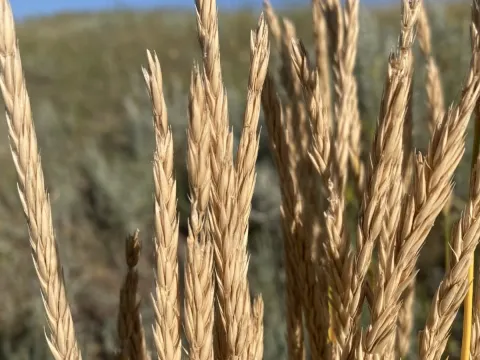
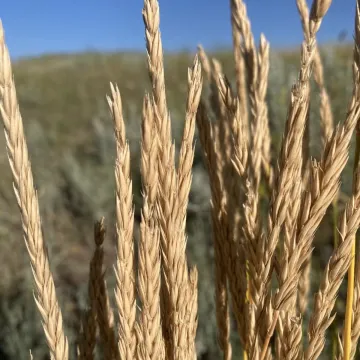
The plant exhibits a bunchgrass growth habit, characterized by dense basal foliage and thin, stiff stems. Its root system is exceptionally deep, which provides the grass with a significant advantage in water uptake during periods of moisture deficit. The seed heads have a brittle rachis, causing the spikelets to break apart upon maturity.
When it comes to agronomic requirements, Russian wildrye prefers well-drained soils and can tolerate a wide range of soil textures, including those with moderate salinity. It is known for its slow initial establishment phase, requiring farmers to maintain weed-free conditions during the first growing season to ensure success.
This grass is primarily utilized as a high-quality forage source for livestock. It remains palatable and nutritious throughout the late summer and autumn, making it a perfect supplement for winter grazing. While it is generally resistant to most diseases, growers should be aware of potential fungal leaf spots during unusually wet years, which are rarely economically damaging.
Photo gallery