Pseudelephantopus funckii
Pseudelephantopus funckii
Description
Pseudelephantopus funckii is a perennial herbaceous plant belonging to the Asteraceae family. Known for its specific biochemical profile, this species occupies a niche position in agricultural and botanical research. It is primarily valued for its potential use in phytotherapy and the pharmaceutical industry, where its unique secondary metabolites are extracted for various medicinal applications.
The origin of this species is rooted in the tropical regions of Central and South America. Its natural habitat includes humid forest fringes and shaded areas where the ecosystem supports consistent moisture levels. Commercially, the cultivation is localized in areas that mimic these tropical conditions, as the plant requires stable environmental parameters to maximize its biomass and bioactive compound production.
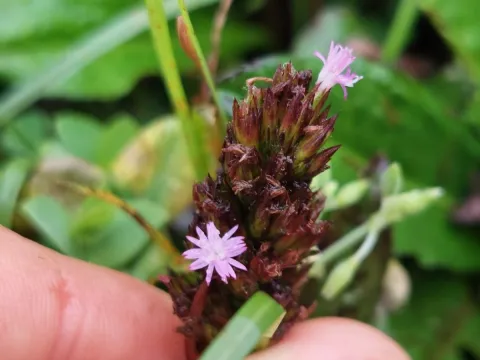
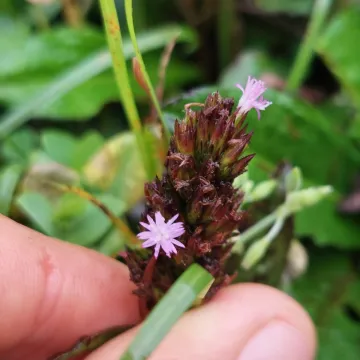
Botanically, the plant is characterized by a dense basal rosette of leaves and an erect flowering stem that reaches moderate heights. The inflorescences are typical for the family, appearing as composite heads arranged in a terminal manner. The root system is relatively shallow but fibrous, allowing the plant to effectively anchor itself in the loose soil of its natural environment.
The agronomy of Pseudelephantopus funckii demands strict adherence to soil and moisture management. The soil must be well-drained, fertile, and slightly acidic, mirroring the conditions of a forest floor. Irrigation should be applied to prevent the substrate from drying out completely, as the plant lacks significant drought-tolerance mechanisms. Strategic shading or the use of agro-netting is often required in open-field settings to prevent leaf scorching.
Regarding its хозяйственное use, the focus remains on the extraction of sesquiterpene lactones for health supplements. Pathogen control is critical in commercial batches; pests such as spider mites and leaf miners can severely impact quality if not managed through integrated pest management (IPM) practices. Maintaining adequate plant spacing and ensuring good airflow are the most effective preventive measures against the development of powdery mildew and other fungal diseases.
Photo gallery