Yellow corydalis
Pseudofumaria lutea
Description
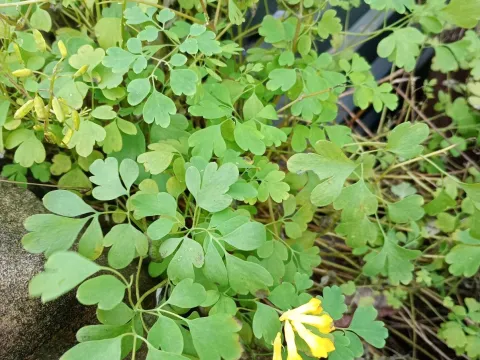
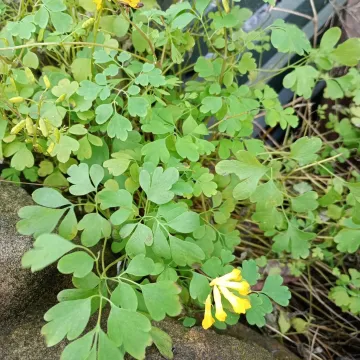
Yellow corydalis (lat. Pseudofumaria lutea) is an herbaceous perennial plant belonging to the Poppy family (Papaveraceae). Often recognized for its resilient nature, this species is widely valued in horticulture for its elegant foliage and long-lasting floral display that provides aesthetic value throughout the growing season.
The plant originates from the mountainous regions of Southern and Central Europe, specifically thriving in calcareous rock formations. Due to its adaptability, it has naturalized in many temperate regions worldwide, where it is cultivated primarily for rock gardens, wall crevices, and as a low-maintenance ground cover in shaded or partially shaded areas.
Botanically, yellow corydalis forms dense clumps of delicate, fern-like, glaucous-green leaves. Its signature features are the bright yellow tubular flowers, which appear in clusters from late spring until the first frosts of autumn. The plant reaches a height of 30–40 cm, maintaining a compact and tidy habit.
For successful cultivation, the plant requires well-draining soil with a neutral to alkaline pH, mimicking its natural limestone habitats. While it prefers partial shade, it can tolerate varying light conditions. Its water requirements are moderate; the plant is relatively drought-tolerant once established, but it thrives when the soil remains slightly moist during peak summer heat.
The practical application and cultivation benefits of yellow corydalis include the following:
- Extended flowering season from spring through autumn.
- Excellent suitability for rock gardens and masonry crevices.
- Low susceptibility to major pests and diseases.
- Minimal maintenance requirements regarding fertilization and pruning.
Photo gallery