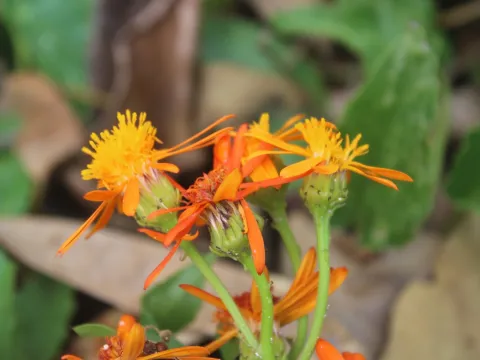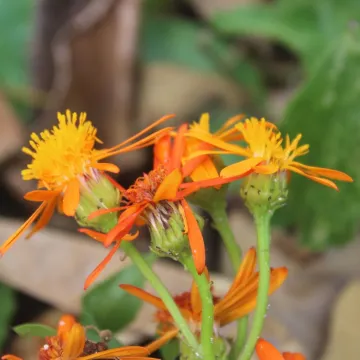
Mexican flame vine
Pseudogynoxys cordifolia
Description
Pseudogynoxys cordifolia, widely known as the Mexican flame vine, is a perennial evergreen climber belonging to the Asteraceae family. This species is highly valued in horticulture for its rapid growth rate and stunning, brilliant orange flowers that resemble daisies. Its lush foliage and bright inflorescences make it a popular choice for vertical gardening in tropical and subtropical regions.
The plant originates from Mexico and parts of Central America, where it thrives in warm, humid forest environments. In its native habitat, it utilizes trees and rocky structures for support, climbing effectively through forest canopies. Outside of its natural range, it is primarily cultivated as a greenhouse specimen or an ornamental annual in colder climates where frost would otherwise damage it.
Botanically, the plant is characterized by its distinct cordate (heart-shaped) leaves with serrated margins and a deep, glossy green hue. The stems are flexible and capable of reaching significant lengths, producing numerous branches that contribute to a dense habit. The inflorescences are showy, capitate heads that typically emerge from the terminals of the vines.
Cultivation requirements include a nutrient-rich, well-draining soil mix that remains consistently moist but not waterlogged. The Mexican flame vine thrives in full sun to partial shade, though protected spots are preferred to prevent leaf scorch. Regular fertilization throughout the growing season encourages more prolific flowering and maintains the vitality of the foliage.
The primary uses of this species include:
- Vertical landscaping for garden walls and pergolas;
- Container gardening for patios and balconies;
- Interior decoration in large, naturally lit sunrooms.
Common plant health issues involve pests such as spider mites, whiteflies, and mealybugs, which are particularly prevalent in indoor or greenhouse settings. Diseases are typically limited to root rot and other fungal infections, which are almost exclusively caused by poor drainage or excessive watering practices. Proper site management is essential to prevent these challenges.
Photo gallery