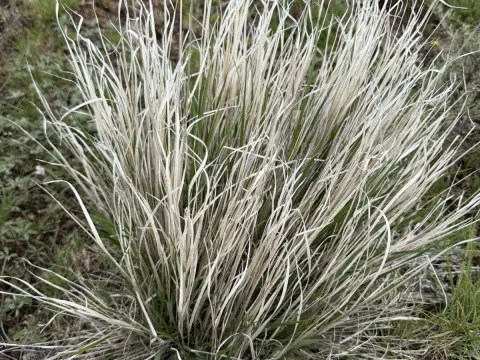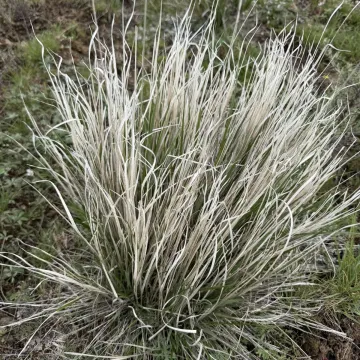
Bluebunch wheatgrass
Pseudoroegneria spicata (Pursh) Á. Löve
Description
Bluebunch wheatgrass (Pseudoroegneria spicata) is a resilient perennial grass species belonging to the Poaceae family. As a prominent agricultural crop, it is highly regarded for its adaptability, forage quality, and ability to thrive in challenging environments where other grasses struggle to survive.
Native to Western North America, this species is a cornerstone of the native bunchgrass prairies. Its historical range and subsequent cultivation have expanded into diverse regions characterized by dry, cold winters and hot summers, making it an ideal candidate for rangeland restoration and managed forage production.
Botanically, it is recognized for its dense, upright tufts of stems and characteristic awned or awnless spikes. Its root system is exceptionally deep and fibrous, which is a key trait allowing the plant to reach deep-seated moisture during arid periods, ensuring persistence even in drought-prone landscapes.
The plant thrives best in well-drained soils ranging from sandy loams to rocky soils. Agronomically, it requires minimal intervention once established; however, initial site preparation is critical. Successful stands are achieved through careful sowing depth control and ensuring proper seedbed moisture during the germination phase to support the early development of seedlings.
In terms of agricultural use, Bluebunch wheatgrass serves as a high-quality forage source for livestock. It maintains its nutrient content well into the maturity stage, providing valuable feed when green forage is scarce. Sustainable management involves monitoring grazing intensity, as excessive utilization during the spring growing season can weaken the plant and reduce long-term productivity.
While generally hardy, the crop is susceptible to certain fungal pathogens, such as leaf rust, especially in areas with poor air circulation or high humidity. Integrated pest management, including the use of certified seed and appropriate grazing rotation, remains the most effective strategy for mitigating disease and insect pressure in large-scale agricultural systems.
Photo gallery