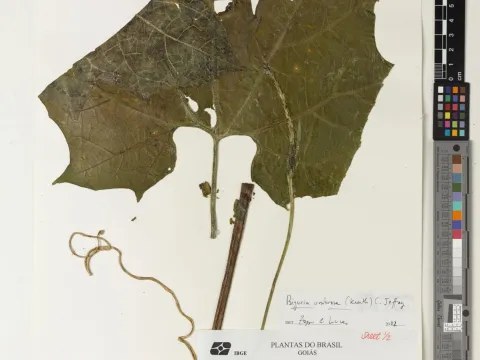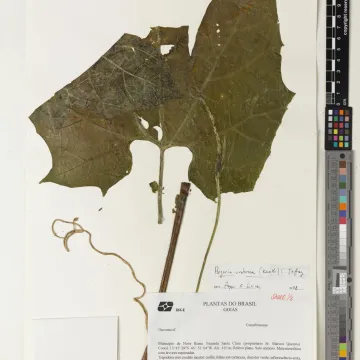
Psiguria umbrosa
Psiguria umbrosa
Description
Psiguria umbrosa is a perennial climbing plant belonging to the Cucurbitaceae family. Unlike many other members of the gourd family that thrive in direct sunlight, this species is uniquely adapted to grow in the understory of dense tropical forests. Its ability to photosynthesize in low-light environments makes it a fascinating specimen for both botanical research and specialized tropical cultivation.
The plant originates from the tropical rainforests of Central and South America. In its native habitat, it functions as a hemiepiphyte or a vine that climbs surrounding vegetation to reach higher levels of light. The geographic range of this species is characterized by high humidity levels and minimal seasonal temperature fluctuations, providing an ideal environment for year-round growth.
Botanically, the plant features flexible stems and distinctively shaped leaves that maximize surface area for light capture. One of its most notable reproductive features is the production of vibrant, tubular flowers, which are specifically evolved to attract hummingbird pollinators. This co-evolution highlights the plant's deep integration into the complex ecosystem of the neotropical rainforest floor.
Cultivation of Psiguria umbrosa requires a precise simulation of its natural forest environment. Growers must maintain high humidity and a consistent temperature range, typically between 20°C and 28°C. The soil should be porous, rich in organic humus, and consistently moist but never waterlogged. Exposure to direct, harsh sunlight should be avoided, as the plant is naturally adapted to filtered light conditions.
- Providing sturdy vertical supports or trellises for climbing.
- Using well-draining, nutrient-dense potting mixes for container growth.
- Regular misting to maintain high ambient humidity levels.
- Applying balanced, diluted fertilizers during the peak growing season.
- Pruning back overgrown stems to maintain plant vigor and shape.
In terms of agricultural and horticultural use, Psiguria umbrosa is primarily valued as an ornamental exotic plant. It is frequently featured in botanical gardens and private tropical collections for its unique aesthetic and biological resilience. Common pests, such as aphids and spider mites, can pose threats in indoor environments, and excessive moisture without proper air circulation often leads to root rot, requiring vigilant management.
Photo gallery