Psoralea aphylla
Psoralea aphylla
Description
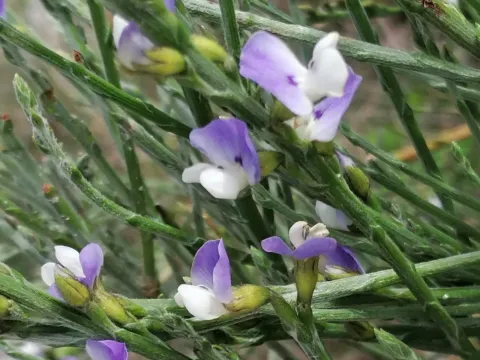
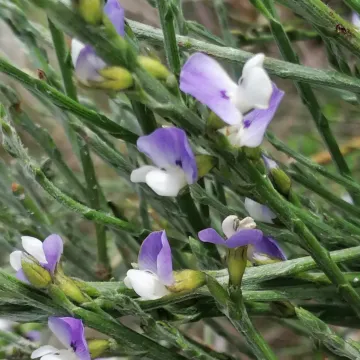
Psoralea aphylla, commonly known as the leafless psoralea, is a perennial shrub belonging to the Fabaceae (legume) family. True to its scientific name, the plant is characterized by its reduced, thread-like leaves, giving the stems a distinctive, rush-like appearance that makes it stand out among other members of the pea family.
The plant originates from the Cape region of South Africa. Its natural distribution is confined to areas with a Mediterranean-type climate, characterized by mild, wet winters and dry, warm summers. As an agricultural or ornamental crop, it thrives best in environments that mirror these conditions, showing poor resilience to heavy frost or sustained high humidity.
Botanically, Psoralea aphylla displays a vertical, shrubby habit with green, photosynthetic stems. The flowers are typically blue to purple in color, adding significant aesthetic value during the blooming season. The plant's root system is adapted to penetrate rocky or sandy soils, allowing it to extract moisture and nutrients efficiently in nutrient-poor substrates.
Successful cultivation requires well-draining soils with a sandy or gravelly composition. The plant demands full sun exposure to maintain its structural integrity and avoid becoming leggy. Over-irrigation is the primary danger in its agrotechnical management, as the roots are highly susceptible to rot if subjected to waterlogged conditions for extended periods.
In terms of хозяйственное usage, it is valued primarily for xeriscaping and landscape architecture in arid and semi-arid regions. Because it is highly drought-tolerant once established, it serves as an excellent candidate for water-wise gardens. Its low requirement for fertilizers makes it a sustainable choice for decorative planting in low-maintenance landscape projects.
- Excellent drought tolerance once established.
- Requires exceptional soil drainage.
- Thrives in full sun conditions.
- Susceptible to root pathogens in heavy, wet clay soils.
Photo gallery