Slender scurfpea
Psoralea tenuiflora
Description
Slender scurfpea (Psoralea tenuiflora) is a perennial herbaceous plant belonging to the Fabaceae family. It is a drought-tolerant legume, characterized by its bushy growth habit and complex root system designed to access deep water tables. Its evolutionary adaptation to prairie environments makes it a highly resilient candidate for soil stabilization.
The native distribution of this species spans the North American prairies, ranging from the central United States down to Mexico. It thrives in open, sun-exposed landscapes where it serves as a critical component of local ecosystems. The plant has evolved to withstand periodic droughts and extreme thermal fluctuations common in its native range.
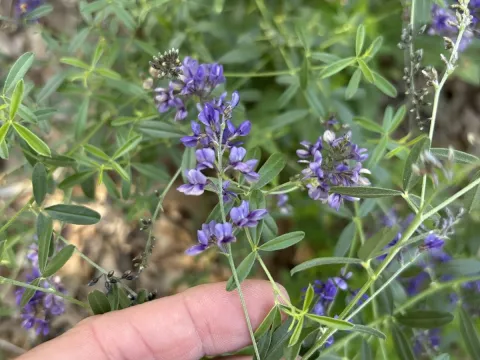
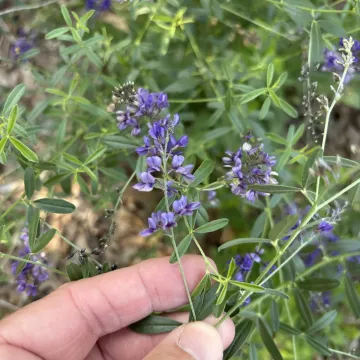
Botanically, the plant is distinguished by its thin, branched stems and compound leaves covered in glandular dots that contain essential oils. The flowers are typically blue or violet, organized in racemes. Similar to other legumes, Psoralea tenuiflora maintains a symbiotic relationship with nitrogen-fixing bacteria, which enhances soil fertility in poor or degraded lands.
Agricultural success depends on well-drained soil types, such as sandy loams or gravelly clay. It is essential to ensure minimal competition during the establishment phase, as the seedlings are sensitive to shading. Once fully established, the plant is remarkably hardy, requiring little input in terms of irrigation or fertilization, making it a sustainable choice for low-input farming.
- Requires full solar exposure for optimal flowering.
- Excellent resistance to soil erosion in arid climates.
- Low susceptibility to common agricultural pests and diseases.
- Can be utilized for land restoration projects.
The primary agricultural uses include cover cropping for land rehabilitation and acting as a hardy forage source in managed pastures. It shows strong resistance to conventional bean pathogens, although monitoring for root diseases in overly saturated conditions is recommended to ensure consistent crop health and longevity.
Photo gallery