Pteranthus dichotomus
Pteranthus dichotomus
Description
Pteranthus dichotomus is a unique herbaceous species belonging to the Caryophyllaceae family. As an agricultural interest, this plant is valued for its exceptional evolutionary adaptations to arid and desert environments, where it serves as an example of extreme drought resistance in botanical research.
The plant originates from North Africa, the Middle East, and parts of Southern Europe. Its native range consists of rocky plains, deserts, and semi-arid regions where rainfall is scarce and soils are nutrient-poor, highlighting the plant's ability to thrive in harsh, challenging conditions.
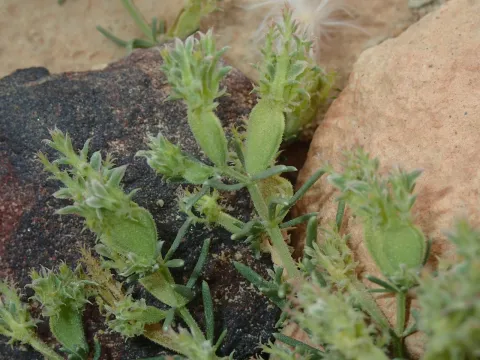
Botanically, Pteranthus dichotomus is defined by its dichotomous branching pattern. The foliage is typically narrow and structured to conserve water, often featuring fine hairs or a waxy cuticle. The plant produces inconspicuous flowers, and its fruit structure is modified to aid seed dispersal through wind, which is crucial for survival in open landscapes.
The cultivation requirements for this species include high solar radiation and extremely well-drained, sandy soils. In agricultural practices, it is essential to mimic the plant's natural habitat by avoiding over-irrigation and maintaining low nutrient levels, as excessive fertilizer can compromise its natural stress-tolerance mechanisms.
Regarding its хозяйственное use, Pteranthus dichotomus is primarily studied for land reclamation in degraded arid areas. While not a commercial crop in the traditional sense, it plays a role in stabilizing loose soils and serves as opportunistic forage for livestock in regions where other vegetation fails to grow.
Common issues in maintaining this plant involve physiological stress caused by environmental changes. Typical pests include aphids and mites, which can become problematic if the plant is forced to grow in high-humidity conditions, which makes it more susceptible to fungal diseases such as root rot and leaf blight.
Photo gallery