Silver brake
Pteris argyraea
Description
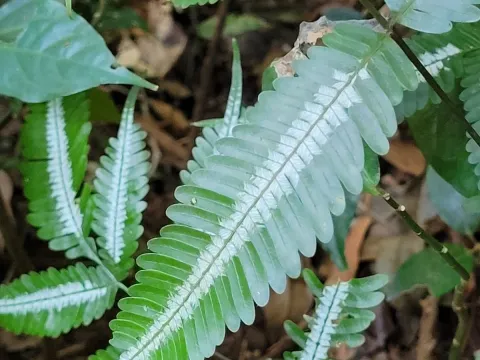
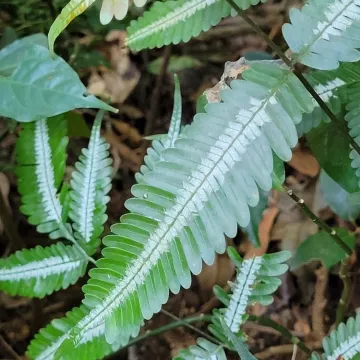
Silver brake (Pteris argyraea) is a perennial fern species belonging to the family Pteridaceae. It is highly esteemed in the horticultural industry for its distinct variegated foliage, characterized by a prominent silver-white band running along the center of each leaf pinna, providing a stark contrast to the deep green margins.
The plant originates from tropical and subtropical regions of Asia, primarily found in the understory of moist forests. Its natural habitat is characterized by shaded areas with high humidity and consistent moisture levels. In cultivation, it has become a staple ornamental crop for interior landscaping and greenhouse production due to its aesthetic appeal.
Botanically, Pteris argyraea features a creeping rhizome and pinnately divided fronds that can grow up to 50 cm in height. The silver variegation is a stable trait that persists throughout the plant's life cycle. Reproduction typically occurs via spores or, more commonly in commercial nurseries, by rhizome division.
Agronomic requirements for this crop focus on microclimate stability. It thrives in well-draining, slightly acidic soil mixes rich in organic matter. Temperatures should be maintained between 18°C and 24°C, avoiding drafts and cold snaps. Partial shade is essential, as direct sunlight can cause leaf scorching and irreversible damage to the fronds.
The primary use of this fern is in ornamental horticulture, particularly as a pot plant for indoor decoration. Maintenance involves diligent monitoring for common threats:
- Spider mites, which thrive in low humidity environments.
- Scale insects that attach to the frond undersides.
- Root rot, which occurs if the substrate remains saturated without adequate aeration.
Photo gallery