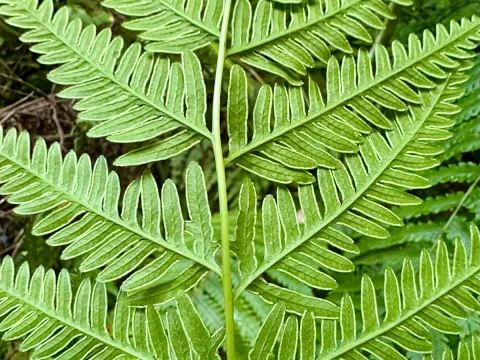

Shaking brake
Pteris tremula
Description
Pteris tremula, commonly known as the shaking brake, is a perennial fern belonging to the family Pteridaceae. This species is widely recognized in horticulture for its ornamental value, characterized by large, elegant, and delicate fronds that tremble with the slightest breeze.
Originating from Australia, New Zealand, and the Pacific Islands, the plant thrives in humid forest habitats. In cultivation, it is primarily used as an indoor ornamental plant or in greenhouses, as it cannot tolerate frost and requires a stable, mild environment to achieve its maximum growth potential.
Botanically, Pteris tremula is distinguished by its bipinnate or tripinnate fronds that can reach up to one meter in length. The root system consists of a short, creeping rhizome. The plant does not produce flowers but reproduces via spores developed on the underside of the fertile fronds, making it a classic representative of vascular cryptogams.
The agrotechnical requirements for this fern are quite specific. It prefers well-draining, peat-based soil mixes that remain consistently moist but not waterlogged. High ambient humidity is critical for the health of the fronds, as dry air often leads to tip browning. Indirect, soft light is essential, as direct sun exposure can severely damage the tissue.
Management of the crop involves regular fertilization during the active growth phase and maintaining hygiene to prevent pests. Common issues include infestations of scale insects and spider mites, which thrive in dry indoor conditions. Proper monitoring and occasional misting of the fronds significantly reduce the risk of biological stress and ensure healthy plant development.
Photo gallery