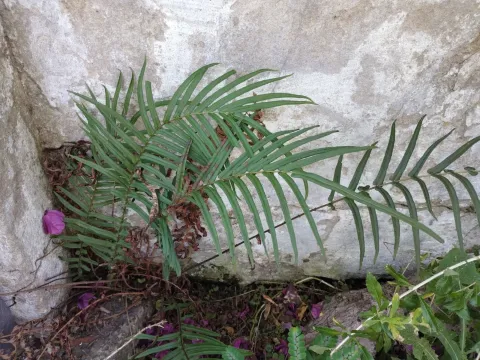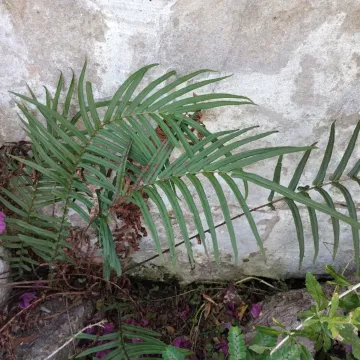
Chinese brake
Pteris vittata
Description
Chinese brake (Latin: Pteris vittata) is a perennial fern belonging to the Pteridaceae family. It is widely recognized in both the horticultural world for its aesthetic appeal and in environmental science for its remarkable physiological adaptations.
The native range of this species extends across tropical and subtropical regions of Africa, Asia, and Southern Europe. It naturally thrives in niches such as limestone outcrops, rocky crevices, and shaded woodland areas, exhibiting a high level of ecological plasticity and the ability to colonize disturbed environments.
Botanically, the plant is characterized by long, pinnate fronds that emerge from a creeping rhizome. The leaflets are linear and possess a firm texture, creating a robust canopy. Its growth habit is relatively rapid, allowing the plant to form dense clusters within a few growing seasons if soil nutrients and moisture are provided.
Cultivation requires specific environmental parameters, primarily high ambient humidity and consistently moist but well-draining soil. The plant does not tolerate waterlogging, which often leads to root distress. It performs best in filtered light; direct, intense sunlight can scorch the fronds and lead to a significant decline in plant health.
The primary agricultural and scientific value of Pteris vittata lies in its status as an arsenic hyperaccumulator. It is extensively studied and deployed in phytoremediation projects to clean up soil contaminated with arsenic, as it can sequester high concentrations of this metalloid in its biomass without showing signs of toxicity.
Regarding health management, growers should be aware of the following issues:
- Spider mites and scale insects which typically infest the undersides of fronds.
- Root rot caused by poor soil drainage and improper irrigation practices.
- Fungal leaf spots triggered by inadequate air circulation in humid conditions.
Photo gallery