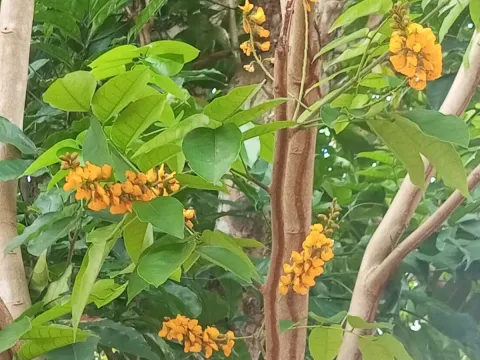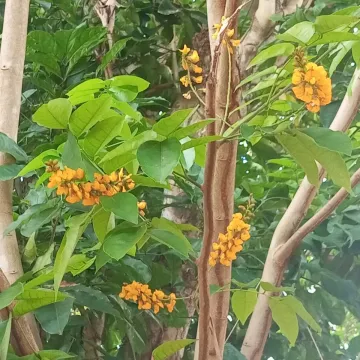
Pterocarpus santalinoides
Pterocarpus santalinoides
Description
Pterocarpus santalinoides is a prominent tropical tree species belonging to the Fabaceae (legume) family. Known for its adaptability to riparian habitats, it is a significant species in tropical forestry. The tree is characterized by its robust growth habit and its ability to thrive in areas where other species might struggle due to seasonal water saturation.
Originating from the tropical regions of Africa, this species is well-adapted to hot and humid environments. It is naturally distributed in lowland rainforests and along riverbanks, where it plays a critical role in stabilizing riverine soils. Its range continues to be important for local ecosystems, particularly in Central and West African forest zones.
Botanically, the plant features alternate pinnate leaves and small, bright yellow flowers arranged in racemes. The fruit is a distinctive, round-shaped winged pod that facilitates seed dispersal via water, an adaptation that highlights its riparian nature. The tree possesses a vigorous root system, which is vital for its survival in flood-prone environments.
In terms of cultivation, Pterocarpus santalinoides requires well-drained but moisture-retentive soils with high organic content. Agricultural success depends on providing adequate space for root development and consistent moisture levels during the establishment phase. It responds positively to balanced nutrient management and controlled weeding in the early stages of sapling growth.
Key хозяйственные uses include the following sectors:
- Timber production for furniture and local construction materials.
- Traditional medicinal practices utilizing various parts of the tree for therapeutic purposes.
- Environmental restoration through erosion control in riverbank management.
- Potential use as a source of biomass in agroforestry projects.
The tree may be susceptible to certain fungal pathogens when grown in high-humidity conditions without proper canopy aeration. Common pests include wood-boring insects and foliage-feeding caterpillars, which can impact growth if not monitored. Integrated pest management strategies, focusing on site selection and plant density, are essential for maintaining healthy plantations.
Photo gallery