Pteronia pallens
Pteronia pallens
Description
Pteronia pallens is a perennial subshrub belonging to the Asteraceae family. Native to the arid regions of Southern Africa, this plant is well-known for its extreme resilience to harsh environmental conditions. In agronomy, it is classified as a vital component of semi-desert vegetation and a natural forage resource.
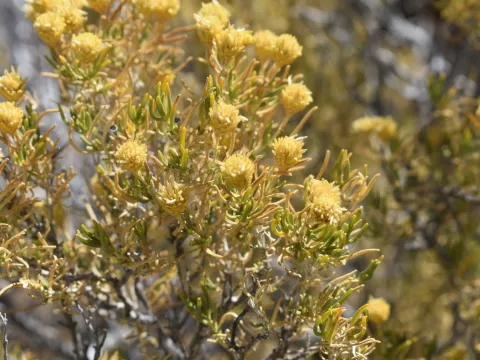
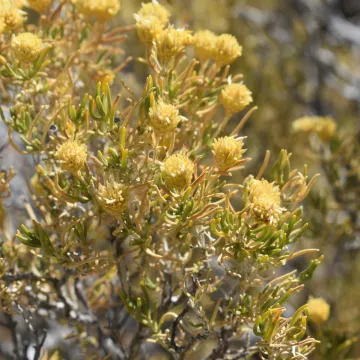
The plant exhibits specific xerophytic characteristics, including small, grayish-green leaves that reflect sunlight and minimize transpirational water loss. Its structure is typically woody at the base with soft, herbaceous annual growth. These biological adaptations allow the species to thrive in regions where conventional crops would fail.
Regarding cultivation requirements, Pteronia pallens favors well-drained, sandy, or rocky soils. It is highly intolerant of waterlogging, which can lead to rapid root decay. The plant requires full sun exposure and is exceptionally drought-hardy, requiring almost no irrigation once established, making it a low-maintenance agricultural crop.
In terms of agricultural use, the primary value of Pteronia pallens lies in livestock grazing, particularly for sheep in the Karoo region of South Africa. It serves as an essential fodder reserve during the dry season. The foliage contains specific chemical compounds that, while providing roughage, require managed grazing to ensure sustainable biomass production.
Typical plant health issues involve localized infestations of insects that have evolved to consume its foliage. Due to the aromatic oils present in the plant, it remains largely resistant to common fungal pathogens and bacterial rots that plague more succulent crops. Careful monitoring of grazing pressure is the most effective management strategy for its preservation.
Photo gallery