Mediterranean saltmarsh grass
Puccinellia festuciformis
Description
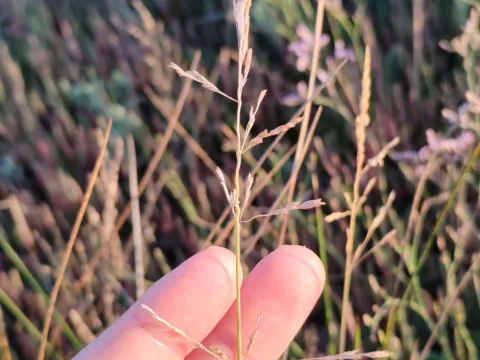
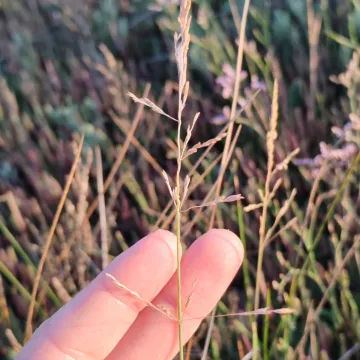
Mediterranean saltmarsh grass (Puccinellia festuciformis) is a perennial grass belonging to the Poaceae family. This species is highly regarded in agricultural science for its exceptional tolerance to saline and alkaline conditions, making it an ideal choice for challenging environments where other forage crops cannot survive.
The native habitat of this plant includes coastal regions and salt marshes, primarily in the Mediterranean basin. Due to its evolutionary adaptation to saline environments, it plays a crucial role in ecological stability and land restoration in areas affected by high salt concentration in the soil.
Botanically, this species is characterized by its tufted growth habit and narrow leaves. The root system is deep and adaptive, allowing the plant to draw nutrients and water even from highly saline soil substrates. These physiological traits make it a resilient perennial that remains productive throughout the growing season.
Agricultural management of this crop involves sowing in soils that are often unsuitable for conventional grain production. It requires minimal fertilizer inputs as it is well-adapted to nutrient-poor, saline conditions. However, successful establishment requires controlling competing weeds during the early vegetative stages until the turf is fully closed.
The primary economic use of this plant is as a forage source for livestock on reclaimed saline lands. It is also extensively used in soil bio-remediation and erosion control projects. The plant shows high resistance to common pathogens and pests, reducing the need for chemical intervention, although proper water management remains important to ensure maximum yield potential.
Photo gallery