Visiani's Lungwort
Pulmonaria visianii
Description
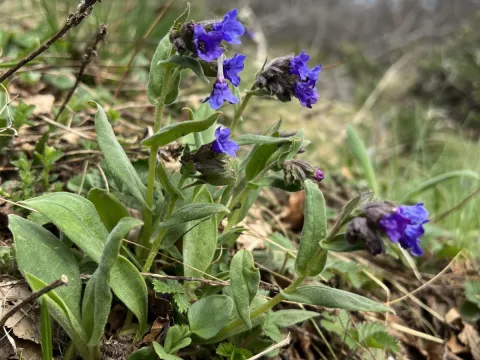
Visiani's lungwort (lat. Pulmonaria visianii) is a herbaceous perennial plant belonging to the Boraginaceae family. This species is highly valued in horticulture for its ornamental foliage, which often features subtle silver or white spotting, and its ability to thrive in shaded environments where many other plants fail. It is a robust plant that provides excellent ground cover.
The origin of this species is traced back to the mountainous regions of the Balkans, specifically the Balkan Peninsula. In its native habitat, it grows in temperate woodland understories. This evolutionary background makes it well-suited for cultivation in temperate climates, provided that the growing environment mimics the cool, shaded conditions of its ancestral home.
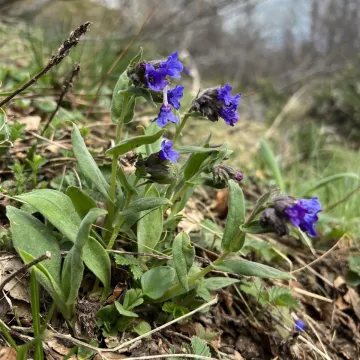
Botanically, the plant is characterized by a creeping rhizomatous root system and a basal rosette of lanceolate leaves. Its flowers are distinctly notable for their color shift from pink to violet-blue as they mature. This biological trait is a fascinating adaptation associated with changes in the pH level of the floral cells, which serves as a signal to pollinators regarding the flower's age.
The agronomic requirements for Pulmonaria visianii focus on moisture-retentive, humus-rich soil. It is essential to ensure that the planting site has good drainage, despite the plant's love for moisture, to prevent root rot. Maintenance tasks are minimal: they include mulching to keep the roots cool, removing faded leaves after flowering to encourage new growth, and dividing the plants every few years to maintain vigor.
In terms of agricultural and horticultural use, it is a staple for shade gardens and forest-edge planting. It is also recognized for its medicinal potential in folk practice, traditionally associated with lung health due to the lung-like appearance of its spotted leaves. The plant is generally disease-resistant, though gardeners should watch for powdery mildew in poorly ventilated areas and protect young foliage from snails and slugs during wet seasons.
Photo gallery