Haller's pasqueflower
Pulsatilla halleri
Description
Haller's pasqueflower (Latin: Pulsatilla halleri) is a herbaceous perennial plant belonging to the Ranunculaceae family. It is a highly regarded species in ornamental horticulture, valued for its early spring blooming cycle and its ability to thrive in harsh, rocky environments where few other plants can establish themselves effectively.
The native distribution of this species is centered in the mountain ranges of Central and Southeastern Europe. It typically grows in open, stony habitats, often on limestone-rich slopes. These environmental conditions define its physiological adaptations, specifically its preference for high light intensity and well-drained, low-nutrient soils that prevent competition from faster-growing vegetation.
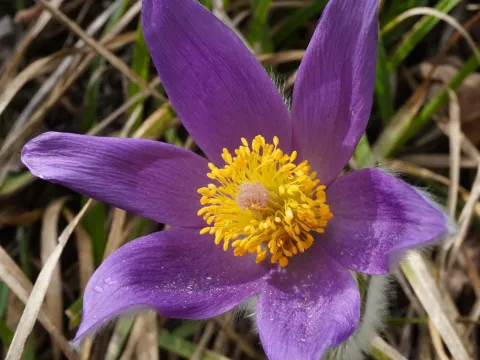
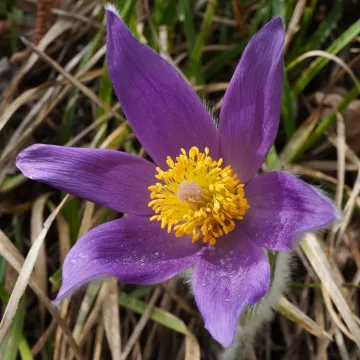
Botanically, the plant is characterized by a dense, silky pubescence that covers its stems and leaves, providing insulation against cold and reducing transpiration. The foliage is finely dissected, forming a rosette, while the large, cup-shaped flowers typically display deep violet hues with prominent yellow stamens. Its root system consists of a robust taproot, which is essential for survival in dry, rocky soils.
Cultivation requirements for Pulsatilla halleri focus on replicating its natural habitat. The soil must be exceptionally well-drained, ideally a gritty or sandy loam with a neutral to alkaline pH. Irrigation should be managed with caution; excessive moisture, especially during the dormant season, is a major risk factor for root decay. Full sun exposure is non-negotiable for compact, healthy growth.
- Use a coarse, gritty soil mix to ensure rapid water drainage.
- Position plants in locations with maximum solar exposure.
- Avoid transplanting mature specimens due to their deep taproot system.
- Incorporate lime or dolomite if the native soil is excessively acidic.
While not a traditional food or fiber crop, Haller's pasqueflower is economically relevant to the ornamental nursery sector. Management of this species involves protecting it from excessive moisture and monitoring for common fungal issues such as root rot. Controlling soil-borne pests is essential, as damage to the primary root often results in the loss of the plant. Proper site preparation remains the most effective form of preventative agronomy for this species.
Photo gallery