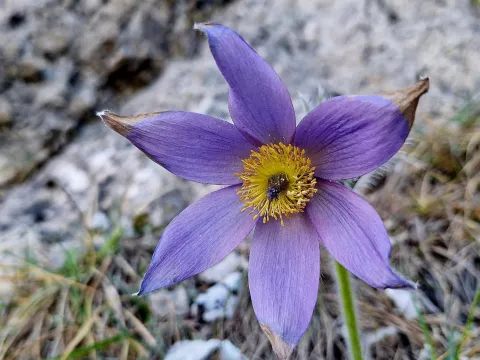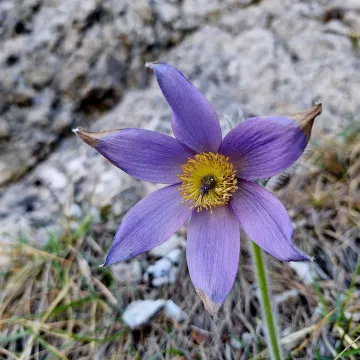
Slovak pasqueflower
Pulsatilla slavica
Description
The Slovak pasqueflower (Pulsatilla slavica) is a perennial herbaceous plant belonging to the Ranunculaceae family. This species is highly valued in horticulture for its early spring blooms and its distinctive silvery-hairy foliage, which provides protection against cold weather and moisture loss.
Its natural habitat is centered in the mountain ranges of Central and Eastern Europe, particularly the Carpathians. It is typically found in well-drained, sunny environments, including limestone slopes and mountain meadows. This evolutionary adaptation makes it a robust candidate for rock garden cultivation in temperate climates.
Botanically, the plant features a basal rosette of pinnate leaves and solitary, bell-shaped violet flowers. It possesses a deep taproot, which is a critical adaptation for survival in rocky, nutrient-poor substrates. This structure also implies that mature plants are intolerant of disturbance and should not be transplanted.
For successful cultivation, the Slovak pasqueflower requires a sunny position and gritty, free-draining soil. It is essential to avoid sites with standing water, as the crown of the plant is susceptible to rot. Once established, the plant requires minimal maintenance, as it is drought-tolerant and well-suited to low-intervention gardens.
The primary use of Pulsatilla slavica is in ornamental landscaping, specifically for rock gardens, gravel beds, and alpine displays. While the plant is generally hardy and pest-resistant, growers should be mindful of the following cultural considerations:
- Ensuring perfect drainage to prevent fungal root diseases.
- Managing nearby weeds that might outcompete young seedlings.
- Monitoring for slugs that may damage emerging foliage in the early spring.
Photo gallery