Mountain mint
Pycnanthemum pycnanthemoides
Description
Pycnanthemum pycnanthemoides, commonly known as mountain mint, is a perennial herbaceous plant belonging to the Lamiaceae family. It is highly valued for its intense mint-like fragrance and its role in sustainable agriculture as an aromatic and medicinal crop. This species is recognized for its robust growth habit and ecological significance.
The plant originates from the Eastern United States, where it typically inhabits open woodlands, meadows, and rocky slopes. Because of its natural adaptation to varied conditions, it is considered a hardy crop capable of thriving in temperate climates. It is increasingly being explored for large-scale cultivation due to its resilience.
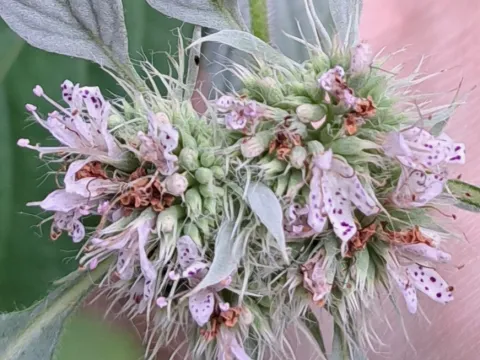
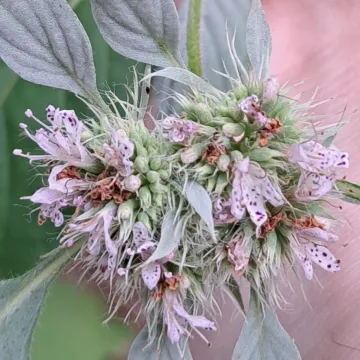
Botanically, the plant features square stems and opposite, lanceolate leaves, which are often pubescent. The flowers are small, white or pale purple, arranged in dense, flat-topped cymes. A unique morphological feature is the presence of silvery bracts that surround the inflorescence, adding to its visual appeal and attracting pollinators such as bees and butterflies.
For successful cultivation, Pycnanthemum pycnanthemoides requires well-draining soil and a sunny or partially shaded location. While it prefers moist, fertile ground, it is notably drought-tolerant once established. Agronomic practices include mulching to suppress weeds, controlled irrigation during peak summer months, and periodic harvesting to encourage bushier growth.
The primary economic use of this crop is in the production of essential oils for the fragrance and cosmetic industries. Furthermore, the plant is widely planted for its insecticidal properties and its ability to provide high-quality forage for honey bees. Potential threats to the crop include aphids, spider mites, and root rot resulting from waterlogged soil conditions.
Photo gallery