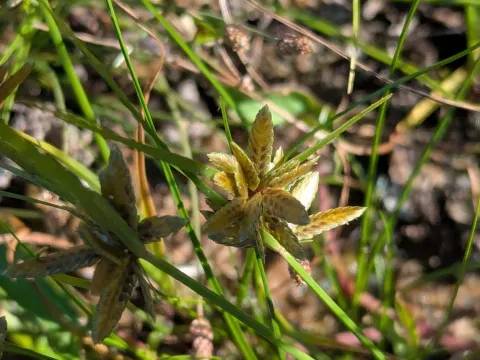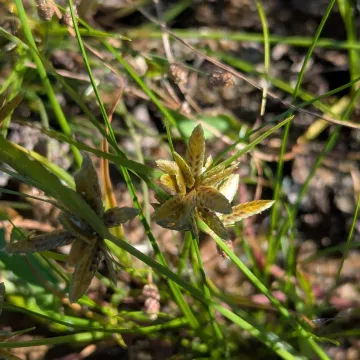
Pycreus rehmannianus
Pycreus rehmannianus
Description
Pycreus rehmannianus is a perennial herbaceous plant belonging to the Cyperaceae (Sedge) family. Often categorized within the Cyperus genus, this species is well-adapted to high-moisture environments. It is recognized for its unique ability to thrive in saturated soil conditions where many traditional agricultural crops fail to develop effectively.
The plant originates primarily from African wetland ecosystems, where it naturally occupies niches along riverbanks and floodplains. Its distribution is closely tied to climates with consistent humidity and warmth. As an agricultural candidate, it requires environments that mimic its natural habitat, making it suitable for regions with heavy rainfall or controlled flood-irrigation systems.
Botanically, Pycreus rehmannianus is characterized by a robust rhizomatous root system that ensures stability in muddy substrates. The leaves are typically linear and basal, supporting a triangular stem that terminates in complex spikelet clusters. Its physiological structure is optimized for efficient nutrient uptake in anaerobic soil conditions, which is a critical feature for its survival and growth.
Agronomical requirements for this crop focus on soil moisture management and organic matter levels. It performs best in silt-heavy soils that remain moist throughout the growing cycle. Cultivation practices involve maintaining specific water levels to prevent moisture stress while ensuring adequate drainage to avoid root stagnation, which could lead to physiological decline.
The хозяйственное (economic) potential of the plant includes its role as a forage crop in wetlands and its use in land reclamation projects to mitigate soil erosion. In certain agricultural systems, it serves as a rapidly growing source of biomass that can be utilized for soil enrichment or as a specialized forage supplement for livestock adapted to wetland grazing areas.
Common health issues include fungal infections of the roots caused by prolonged water stagnation in the absence of nutrient flow, and susceptibility to specific sedge-specialized pests. Integrated pest management for this crop involves careful monitoring of water quality, maintaining plant density to discourage weed competition, and implementing rotational harvesting to ensure the long-term vitality of the rootstock.
Photo gallery