Sage-leaved pear
Pyrus salviifolia
Description
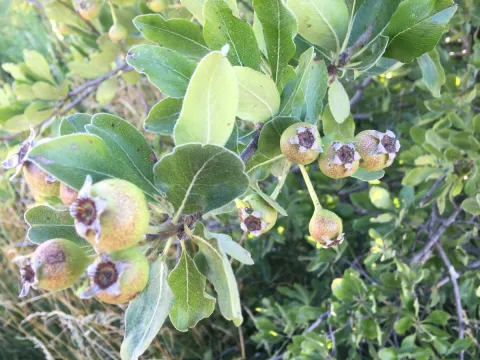
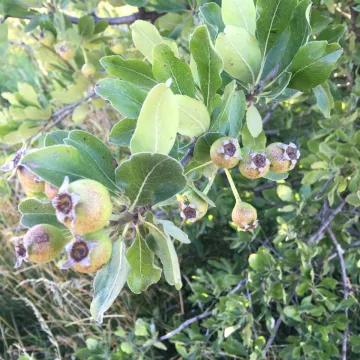
The Sage-leaved pear (Latin: Pyrus salviifolia) is a distinctive species of the Rosaceae family, recognized for its exceptional resilience. The tree is named for its unique foliage, which features a silver-grey downy texture similar to the leaves of common sage. This species is highly regarded in horticulture for its ornamental value and its biological hardiness.
The origin of the species is traced back to Southeast Europe and Western Asia. Throughout its evolutionary history, it has adapted to rugged landscapes, including rocky mountainous terrains and dry, nutrient-poor soil conditions. This natural adaptation has made it a preferred choice for restoration projects in areas where more delicate fruit varieties struggle to establish themselves.
Botanically, this species is defined by its ability to thrive under thermal stress. The pubescence on its leaves serves a critical function: it minimizes transpiration during peak summer heat, allowing the tree to maintain physiological functions even in water-deficit conditions. The tree produces small, typically astringent fruits, while its floral display in the spring is considered highly decorative.
Regarding agricultural requirements, the tree is undemanding and prefers well-drained soils and direct sunlight. Basic agronomic practices involve minimal pruning to maintain shape and ensure air circulation, alongside periodic fertilization. Because it is highly resistant to drought and cold, it requires significantly less water and chemical intervention compared to commercial high-yield orchard varieties.
The primary agricultural and economic uses include:
- Role as a hardy rootstock for grafting commercial pear cultivars.
- Application in landscape architecture for drought-prone urban environments.
- Genetic conservation and breeding for climate-resilient future varieties.
- Use in sustainable agroforestry systems as a windbreak or soil stabilizer.
While the tree is robust, it remains susceptible to standard pear diseases such as fire blight and scab, especially in high-humidity climates. Integrated pest management strategies, such as biological control and systematic pruning, are generally sufficient to manage populations of aphids or mites. With proper monitoring, the Sage-leaved pear remains a long-lived and productive addition to any agricultural setting.
Photo gallery