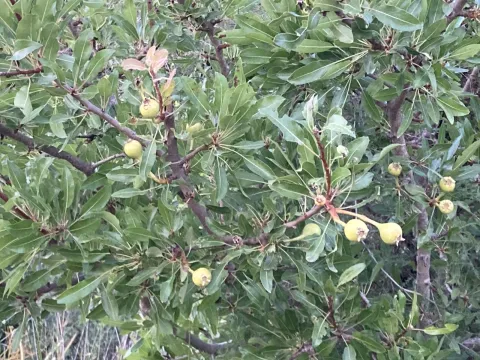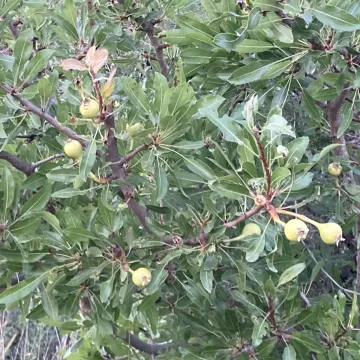
Syrian pear
Pyrus syriaca
Description
The Syrian pear (Pyrus syriaca) is a deciduous tree belonging to the Rosaceae family. It is recognized by horticulturists as a wild relative of the common pear, possessing a unique genetic pool that provides resilience against environmental stressors.
The native distribution area of this species spans the Middle East, particularly Syria, Lebanon, Turkey, and parts of Iran. It thrives in arid and semi-arid environments, often dominating rocky slopes and scrublands where water availability is significantly limited.
Botanically, Pyrus syriaca is characterized by its thorny branches and small, firm fruits that contain numerous stone cells. The leaves are typically ovate and leathery, providing a natural adaptation to intense solar radiation and high transpiration rates prevalent in its natural habitat.
In terms of agricultural requirements, the species is remarkably undemanding. It grows well in alkaline and calcareous soils where other fruit trees would suffer from nutrient deficiencies. Its primary agricultural utility lies in its exceptional root system, which explores deep soil layers to acquire moisture.
The plant is extensively studied for its potential in breeding programs, particularly for developing pear varieties that can withstand global climate change. It is also used as a hardy rootstock for commercial pear production, effectively reducing the need for irrigation and chemical treatments against common pests like fire blight.
- Extreme tolerance to heat and drought.
- Resistance to soil-borne pathogens.
- Excellent potential as a rootstock.
- Valuable genetic source for stress-tolerant breeding.
Photo gallery