Pyxidanthera barbulata
Pyxidanthera barbulata
Description
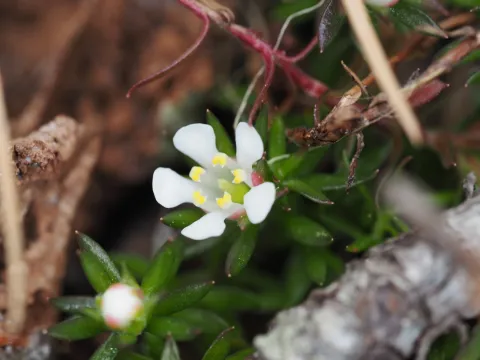
Pyxidanthera barbulata, commonly known as flowering pyxie or pyxie-moss, is a low-growing evergreen perennial belonging to the Diapensiaceae family. Despite its common name, it is not a true moss, but a shrublet that forms compact, mat-like clusters. It is highly valued in specialty gardening for its slow-growing, creeping habit and delicate spring floral display.
The native distribution of this species is confined to the eastern United States, primarily within the New Jersey Pine Barrens and parts of the Carolinas. It thrives in specialized habitats such as open, sandy, and acidic pinelands. This unique provenance necessitates careful site selection when attempting to cultivate the plant in domestic garden settings, as it is highly adapted to specific nutrient-poor substrates.
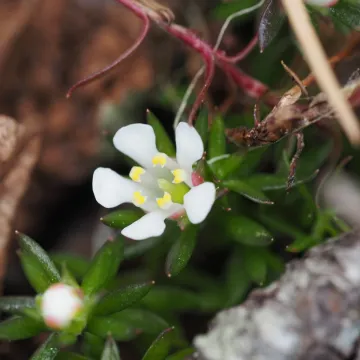
Botanically, the plant features tiny, lanceolate, evergreen leaves that are densely packed along the stems. The flowers are small, bell-shaped or saucer-shaped, emerging in early spring to cover the foliage in white or pinkish hues. Its overall growth architecture is designed to minimize moisture loss and endure the harsh, dry conditions typical of its native sand-based environment.
Cultivation requirements are strict. Pyxidanthera barbulata demands an acidic, well-draining sandy soil with low organic content. Irrigation must be managed with care to prevent water stagnation, which is the leading cause of decline for this species. It prefers full sun to light shade and performs best when allowed to settle in undisturbed, well-aerated soil profiles, making it unsuitable for areas with heavy clay or limestone.
The primary horticultural application is in rock gardens, scree slopes, or specialized container gardens designed to mimic its natural environment. Disease management focuses on preventing root rot and damping-off, often caused by poor aeration or excessive humidity. Pests are rarely a major issue, but maintaining high hygiene standards around the plants is essential to prevent fungal foliage spot diseases.
- Family: Diapensiaceae
- Growth habit: Creeping evergreen shrublet
- Flower color: White to pink
- Bloom time: Early spring
- Soil preference: Highly acidic, sandy, well-drained
Photo gallery