Rambai
Baccaurea motleyana (Muell. Arg.) Muell. Arg.
Description
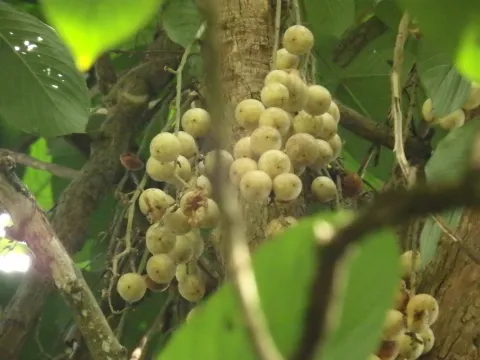
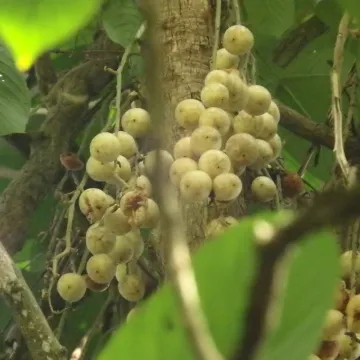
Rambai (Baccaurea motleyana) is a significant tropical fruit tree belonging to the Phyllanthaceae family. Native to Southeast Asia, specifically regions like Malaysia, Indonesia, and Thailand, this species is highly valued for its clusters of edible berries that grow directly from the trunk and branches of the tree.
Botanically, the Rambai tree is a medium-sized evergreen that can grow quite tall in its native habitat. It features large, leathery leaves and produces dioecious flowers, meaning male and female flowers are typically found on different trees. Proper pollination is essential for achieving a high fruit yield in plantations.
Cultivation of Baccaurea motleyana requires a humid tropical climate with consistent temperatures between 22°C and 30°C. The tree thrives in deep, fertile soils rich in organic matter. It requires significant rainfall throughout the year and does not tolerate prolonged droughts or waterlogged soils, which may lead to root rot.
Agricultural management involves regular pruning to maintain tree shape and ensure better light penetration to the inner branches. Fertilization with compost or balanced NPK blends is recommended during the early years of growth to establish a strong root system. Irrigation must be managed carefully, especially during the flowering and fruit-setting stages.
The fruits of the Rambai tree are harvested when they turn a uniform color, ranging from light yellow to purple. They are popular for their sweet and sour pulp, often consumed fresh or used in various culinary applications like juices and jellies. Potential pests include leaf-eating insects and aphids, which are generally controlled through standard integrated pest management practices.
- Scientific name: Baccaurea motleyana (Muell. Arg.) Muell. Arg.
- Growth habit: Ever-green, broad-leaved canopy.
- Fruit structure: Multiple berries in pendulous racemes.
- Culinary use: Fresh snacks, preserves, and drinks.
Photo gallery