
Description
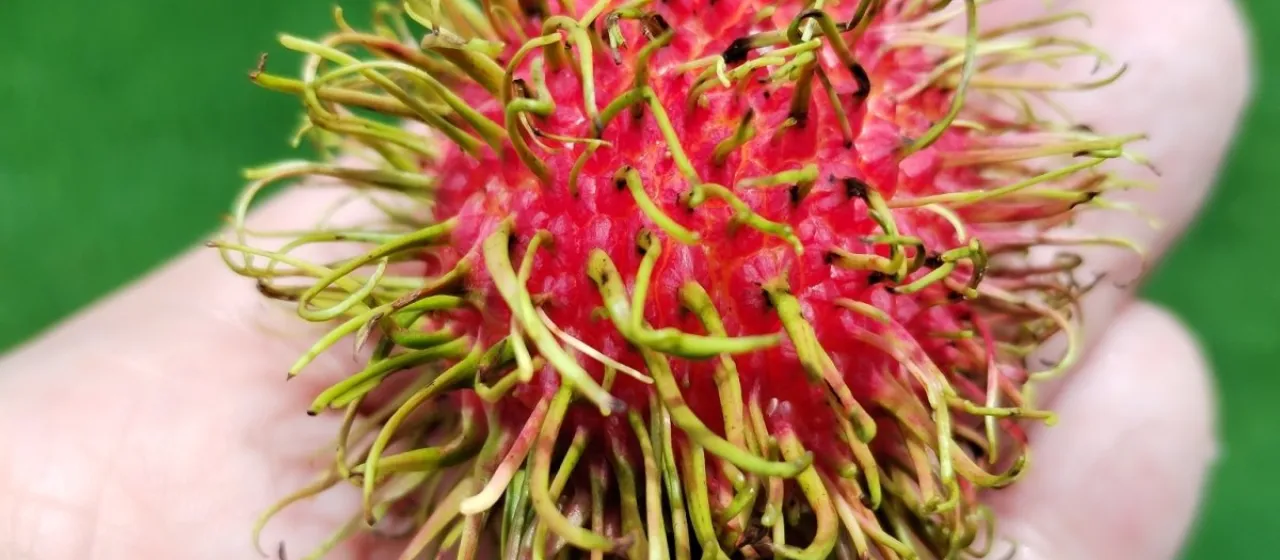
Rambutan (Nephelium lappaceum L.) is a tropical evergreen fruit tree belonging to the Sapindaceae family. The fruit is characterized by its distinct, hair-like soft spines, which give it a unique appearance compared to other tropical fruits like lychee or longan.
Originating from the Malay-Indonesian region, the plant is now widely cultivated across Southeast Asia, parts of Central America, and Hawaii. It thrives in tropical climates where the temperature remains consistently warm and rainfall is evenly distributed throughout the year.
The tree can grow quite large, often reaching heights of 12 to 20 meters. It features pinnate leaves and small, fragrant flowers arranged in panicles. The fruit is a drupe, which is generally red in color, though yellow or orange varieties also exist, containing a sweet, succulent aril surrounding a single seed.
Agronomically, the plant requires deep, loamy, and well-draining soil with an acidic to neutral pH. It is sensitive to waterlogging, although it demands significant soil moisture during the fruit development stage. Propagation is typically achieved through grafting or budding to ensure the high-quality characteristics of the parent tree are preserved.
The primary use of the crop is for fresh fruit consumption, but it is also processed into jams, canned products, and syrups. The seeds are sometimes processed to extract fats for industrial use, and various parts of the tree are utilized in local traditional herbal practices.
Common agricultural challenges include infestations by mealybugs, aphids, and fruit flies. Furthermore, the tree is susceptible to fungal diseases such as downy mildew and fruit rot, which can significantly reduce harvest yield if not managed with proper spacing, airflow, and integrated pest management techniques.