Aconite-leaved buttercup
Ranunculus aconitifolius
Description
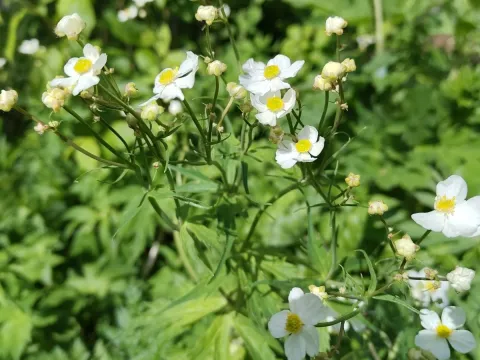
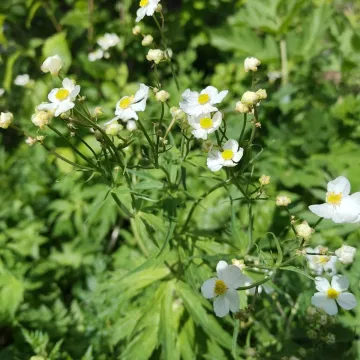
The Aconite-leaved buttercup (Ranunculus aconitifolius) is a perennial herbaceous plant belonging to the Ranunculaceae family. Highly valued in ornamental horticulture, it is recognized for its elegant, pure white flowers and deeply lobed leaves that resemble those of the monkshood, distinguishing it from other meadow buttercups.
Originating from the mountain ranges of Central and Southern Europe, this species is well-adapted to cool, humid environments. It typically grows in alpine meadows and woodland margins. Its cultivation success depends on replicating these conditions, making it a staple in temperate climate gardens across the Northern Hemisphere.
Botanically, the plant develops into a clump-forming perennial, reaching heights of 60 to 90 centimeters. The foliage is lush and dark green, providing a perfect backdrop for the small, cup-shaped flowers that appear in late spring. It is a robust plant that spreads reliably if the environmental conditions meet its specific needs.
Regarding agrotechnical requirements, it thrives in moist, humus-rich soil that offers consistent moisture without becoming waterlogged. While it can tolerate full sun in cooler regions, it prefers partial shade in warmer climates to prevent leaf scorch. Propagation is efficiently achieved through spring division or autumn sowing of seeds.
The primary use of this crop is in ornamental landscaping, particularly for moist borders, waterside planting, and woodland gardens. Despite its toxicity, which is typical for the Ranunculus genus, it is a safe choice for decorative areas if managed correctly. Major pest and disease issues include occasional infestations of aphids and susceptibility to powdery mildew in poorly ventilated planting sites.
Photo gallery