Ivy-leaved crowfoot
Ranunculus hederaceus
Description
Ivy-leaved crowfoot (Ranunculus hederaceus) is a perennial herbaceous plant belonging to the Ranunculaceae family. Unlike many terrestrial members of the genus, this plant is specifically adapted to damp habitats, including shallow ponds, mudflats, and stream margins, where it thrives in high moisture conditions.
The species is native to Western and Central Europe, extending into parts of the Mediterranean. It is well-suited to temperate climates where consistent moisture is present throughout the growing season. While not a primary field crop, it serves an important role in ecological restoration and the design of sustainable water features.
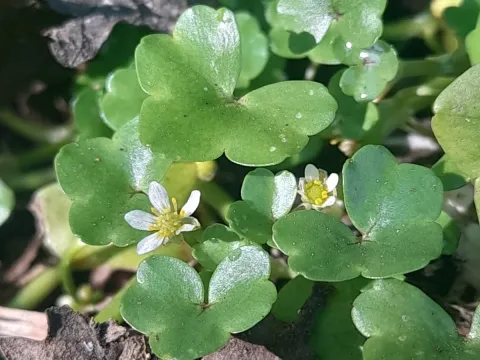
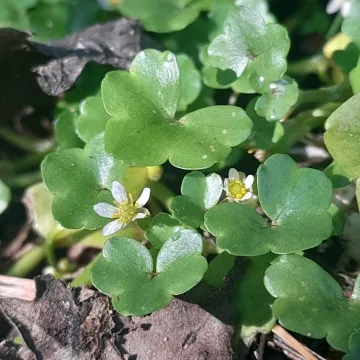
Botanically, the plant is characterized by creeping or floating stems that root at the nodes. The leaves are distinctively lobed, resembling ivy, which provides the common name. The flowers are small and white, appearing on short peduncles above the foliage. This growth habit allows it to form dense, mat-like colonies that can effectively stabilize wet soil surfaces.
Cultivation requires specific environmental conditions, primarily constant saturation of the soil or shallow water. The plant performs best in semi-shaded to sunny environments with rich, organic-heavy soil. Propagation is most efficiently achieved through stem cuttings or division of established mats, which readily take root in moist substrates or shallow water.
- Requires consistent water levels
- Prefers nutrient-rich, silty soil
- Thrives in cool to temperate climates
- Sensitive to excessive salinity and chemical runoff
In terms of usage, it is primarily valued for its ornamental role in water gardens and as an indicator of clean, freshwater environments. Pests are generally minimal, although the plant may be susceptible to root rots or powdery mildew if the water circulation is poor or if the plant becomes too densely packed for proper airflow.
Photo gallery